Three-In-One Mornings

The depth of winter is one of my favorite parts of the year.

Sure, it can be cold and there can be plenty of snow. Both those things are great assets of the winter. The former keeps bugs at bay, and the latter paints the world in pristine white.

Some folks shoot river rapids in a kayak for the thrill of it. Some folks climb huge mountains past the timberline in grueling conditions. Some folks will jump out of a helicopter to ski and snowboard in the most isolated places. For me, there is the challenge of winter. Not just surviving, but thriving. To scoff at temperatures in single digits, and equally dismiss double-digit winds. To wrap in layer upon layer then don snowshoes for a leisurely walk. To stand atop Nishan Hill and be shaken like a sapling by the winds of winter.

Snowy Sunrise

One of my favorite things about winter is the morning commute. In winter, it’s dark when I rise. There’s something about moving about a kitchen quietly, letting the dog out, putting on the pot of coffee when it is still night outside. It’s a special time of night, too. Early night still sees traffic and lights on in living rooms. Late night has its own feel. Third-shifters bound for work, folks at The Snack Store mopping up to close. At this pre-dawn hour, it is much quieter. Only the snow plow rumbles down Engleville Road, and The Snack Store hasn’t turned on the lights yet.

Sassy June wants to go on the long dog run beside the woods, and I cross the driveway to fulfill her wishes. The only illumination is the soft incandescent glow of the cabana lights, casting a yellow hue on the snow. I turn to go in and I am stopped in my tracks by the Milky Way, stretching from the southwest to the northeast across a crystal-clear frozen sky. I stand and stare and marvel at this beauty until the snow creeps into my slippers and I’m reminded I am not wearing a coat.

Eagles In Snow

Dog in, pellet stove fed, Thermos filled, and it’s time to leave. Goodbyes and lights out, and The Ark returns to nighttime as Juney climbs onto my reading chair to go back to bed. Headlights on, three rabbits are startled and dash for the hedgerow. Pulling out, I pause to look back, and call to my angel puppy to join me on the drive. He’ll be gone four years this July, but I think of him every day. I say “Good morning, angel puppy.” to his grave, tell him there’s plenty of room in the car for a ghost. The dog’s grave, the silhouetted sugar maples and the sleeping home fade in the rear view mirror as I grudgingly depart my favorite place on the planet.

Driving in the dark. Most of the world is relegated to a cone of light directly in front of the Fun Bus. There is just enough breadth in the headlights’ beam to light the sides of the road, where my eyes keep constant watch for animals of all kinds. Many critters come out only at night, and others will take advantage of the darkness when they can. Whitetail deer are the main threat, as they move quickly and weigh as much as a man. The “Deer Watch” light is always on in my brain whenever we traverse dark roads. Snow illuminated by the headlights is entrancing, magical.

The night sky is not black. It is a deep, glowing blue. Deeper than blue, maybe. Countless stars fill the heavens, and there are often sightings of our cosmic neighbors, the fellow planets of our solar system. I’ve seen quite a few meteors while driving in the night. The moon dances in and out of mornings. Sometimes high, sometimes low, sometimes large and sometimes small, and sometimes none at all. Sometimes it will back light clouds in the sky, and cast warm orange tones on them. Sometimes it is a bright full ball that shines like a beacon, casting deep shadows on the snow like a Hollywood “day for night” shot.

It is an exclusive club this early on the road. Milk tankers haul from dairy farm to dairy farm, heading eventually to the Midland Farms dairy plant, or the Dairylea Co-Op. Farmers are out at all times. I’m likely to see a manure spreader plodding along the side of the road, headed for the entrance to the cornfield. I’ve seen harvesters cutting corn under the lights at seven and eight o’clock at night, but it seems only manure spreaders are allowed before dawn, with the exception of Agway’s huge ag trucks hauling lime to the fields in April and May. Their oversized balloon tires making them bounce as they ply the pavement. We may see a sheriff’s deputy or a State Police cruiser, winding up their shift, heading home to bed soon. Tractor trailers pull out of the distribution center east of the village, bound for stores across the area.

Madrugada

Somewhere along U.S. Highway 20, eastbound, the edge of the night sky begins to brighten. Deep indigo fades to pale blue. In Spanish, the word “madrugada” is used to describe this “time between night and morning”. Birds are waking now, as are people in their homes. Lights come on in houses, and a few more cars join the parade. The first yellow school bus may be seen, heading for the start of the route.

Now we can peer into the fields and see wild turkeys, the occasional coyote may streak past, galloping full speed to the safety of the woods. The monotone world of night begins to see its first hues of the day. The sky becomes brighter blue, displays wisps and ribbons of white clouds. The earliest hints of the sun begin to tone the sky in orange or pink or deep red. Thanks to the snow cover, we can see farm animals silhouetted in fields, cows, horses, goats, sheep.

Somewhere between Carlisle and Sloansville, the big red ball will crest the horizon. Twice a year it sits dead center in the highway as I drive due east. First, the clouds at the edge of the sky will alight, ablaze in red. Then the atomic fireball climbs over the end of the Earth, and I am floodlighted by a blinding beam. Now all the world is red. The sky and the snow, the road and the trees and even the sheep and the goats. Some days, if there’s heavy cloud cover, we will be denied this display. When storm clouds blanket our world, and snowflakes fly.

Dawn Buck

Now we catch the tardy. Those who would be abed by dawn, caught by the sun. A young fisher streaks his way across the corn stubble, dashing for the Schoharie Creek. A possum hastens, as best a possum can hasten, which is not too hasty, and I brake for the wildlife crosswalk. An owl of the night heads for the roosting tree. Birds seem to multiply with the increasing light, and now great flocks of Canada Geese, sometimes Snow Geese, take to the sky with a raucous clatter. After February, after hibernation season, we may smell the skunk even if we don’t see it.

Fisher At Sunrise

I stop just past the bridge over the Schoharie, stunned by the sunrise bleeding through the fog, shadowy arms of trees contrasted against the brilliant light. I have a three minute window to shoot this photo before the Earth moves beneath me and the moment and image pass. Climbing the on-ramp to Interstate 88, beside the field where I shot fifty frames of a mother coyote on the hunt, the rich flatlands stretch out over my right shoulder. The sun is pouring down between ridges, and lights the village of Schoharie with a bright beam. Up, up, up the long draw I climb. Up out of the Schoharie Valley, crossing the ridge, parallel to the Mohawk River Valley, and on into the Hudson River watershed. As I settle onto the flat stretch of highway, the full sun leaps up from the horizon, and the lights come on for a shiny new day.

Sunrise Over Corn

Now it is truly dawn, and the whole world seems to notice. There are more cars on the road, and school buses on the secondaries, red lights flashing. Cawing crows and ravens fly about, and a bald eagle is sighted over the swamp. This is where I saw the bear a number of years ago, trotting out from the edge of the woods, startled to find a road before him. The sky holds one show after another, and I must tell myself I can’t stop and shoot more pictures. I already spent ten minutes by the creek shooting the fisher and the trees in the golden sunrise, and each minute’s delay takes from my employer’s time.

Bus Stop

The light angles steeply into secret holds in the woods, casts a copper glow on everything. In a matter of minutes it will rise up out of the morning show. It will burn off the dramatic fog. It will drive the fishers and possums into their daylight quarters, and rise into the blue sky until this magical time, too, passes, and we are drenched in daylight.

As spring nears, the captivating three-in-one mornings become a thing of the winter past. I’ll rise as the sun knocks at my kitchen window, and in summer the light will stretch out to nine o’clock. Now patience is required. I will have a dozen more three-in-one mornings, stolen in short stints at campsites on a remote lakeshore, or garnered as part of the pre-dawn fishing excursion on Sundays. Then I must wait. For August. Then September. The sun centers itself on U.S. Highway 20 again, and while the rest of the world begins preparing for winter, I drive easterly, a foolish grin on my face, looking like the village idiot.

And I will revel in the darkness that begins my favorite season, and eagerly anticipate another quarter-year immersed in the magic of three-in-one mornings.


Take care and keep in touch.


Paz
Sedentary Sunday

Feeder Friends

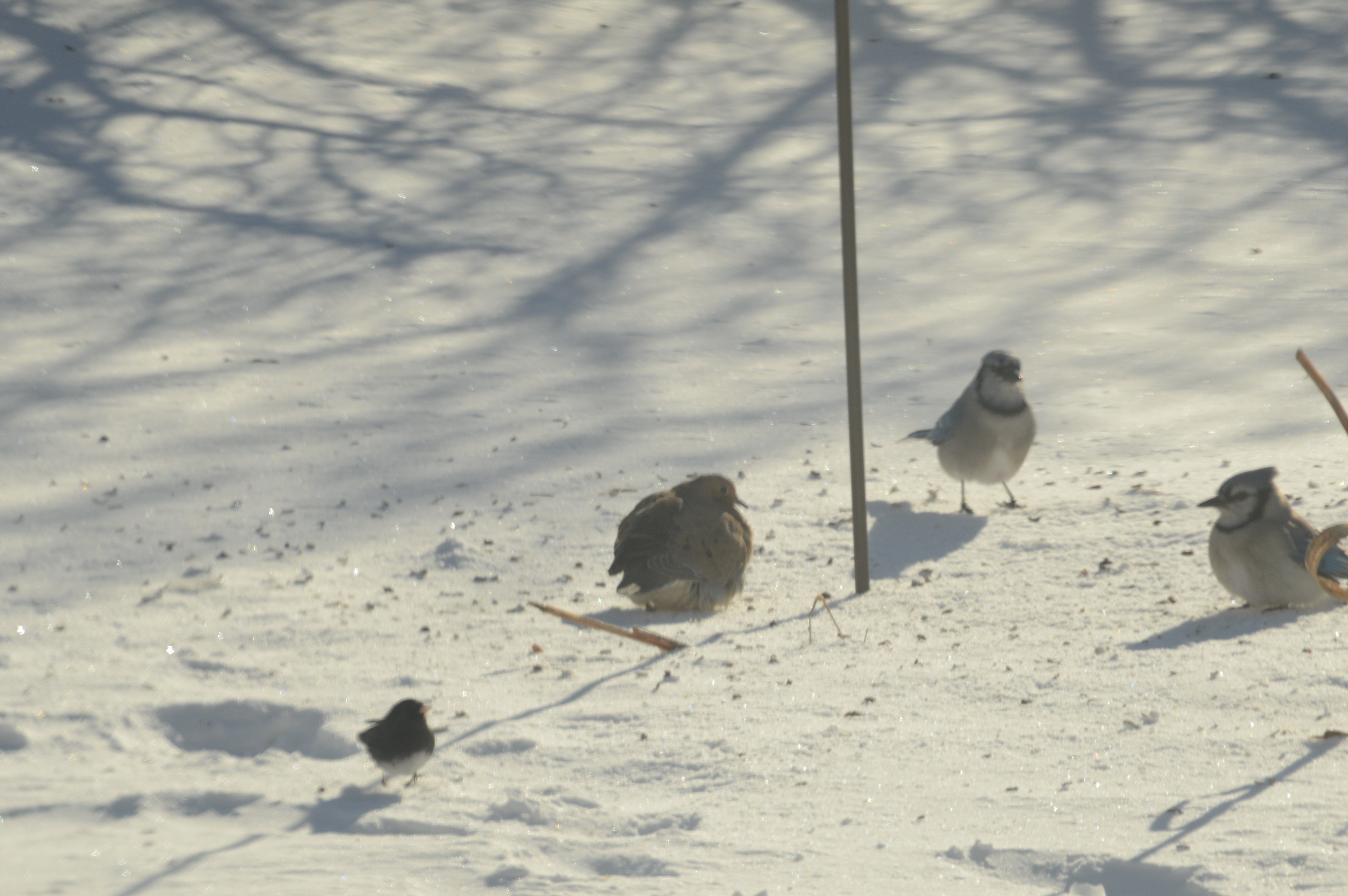
The Mourning Dove is too large to land up on the feeder. He makes his rounds on the ground as the Jay shovels aside the millet and cracked corn, digging out a sunflower seed before flying to the lilac to eat it. The sparrows dodge the heavy traffic as the little gang of Jays mobs the feeder.

The sky is grey and a light snow is falling. Not tiny flakes but not the big fat ones either. Just the right size for viewing. To watch them dance, driven in every direction by the January wind. They flit about on courses not unlike the birds’.

At the kitchen window, I lean my elbows on the counter, rest my chin in my palms, and gaze out at the snow falling, boldly contrasted by the evergreen backdrop. I see Sassy June standing in the driveway. She remains motionless and stares for the longest time. Watching the woods and lawn for bunnies or neighbor cats. I adopt her attitude, and stare myself out into the beauty of the day. Not a look to see what the weather may be, nor a glance to check on the dog, but simple, mindless, timeless staring into the ever-wondrous world.

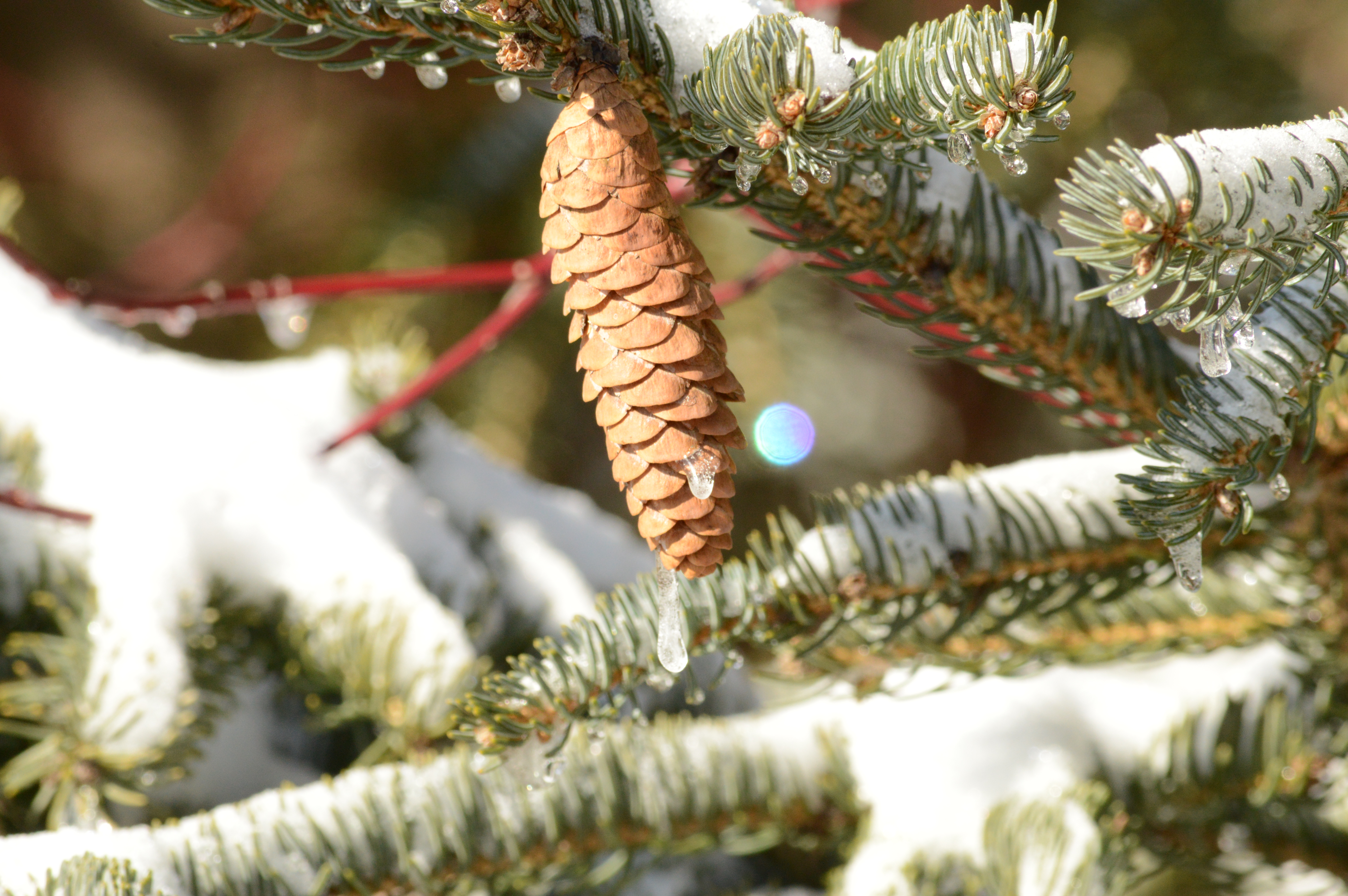
Snow Cone

Standing by the wood stove, I continue reading between peeks out the south window at the feeder. I’m reading Keith Billington’s book about a reenactment of a turn-of-the-century dogsled patrol by the Royal Northwest Mounted Police. It is famous, or perhaps infamous, among the people and places close to the story. It is known as “The Lost Patrol”, and it is a tragically heroic story of four men in the service perishing after becoming lost in the vast and brutal Northwest Territory of Canada.

Here I sit on a January day, the perihelion having passed just yesterday, and read the account of men who rode off into the Arctic night of December and January, when the sun would refuse to rise for a month. It’s twenty four degrees Fahrenheit here, and barely a dusting of snow covers the ground. Between Fort McPherson and Dawson, the snow piles five feet deep, the temperatures plunge below zero, and winds blow so hard that small rocks and bits of shale become airborne, hurled like so much shrapnel.

Billington’s story is of a reenactment of the ill-fated 1910 patrol. In 1970, he would travel by dogsled with sixty-seven dogs and ten companions, and traverse the rugged wilderness between Fort McPherson and Dawson City. Titled “The Last Patrol”, it occurs at the last chance to see this pristine country as The Lost Patrol had, as the construction of the Dempster Highway, traversing a parallel route, was underway.

In Engleville, the sky remains a sullen grey overcast, then suddenly the sun breaks through illuminating the flakes of snow. Just as quickly, the sun hides, and the winds blow at seventeen miles per hour, shaking the trees, grounding all but the most skilled flyers. I’m called upon for domestic duty. A run to the trading post for essentials; bread, Cool Whip, seltzer water. So determined am I to return to my lazy Sunday reading by the wood stove and counting snowflakes, I pull my pants on over my pajamas rather than don long johns. Upon my return, son-in-law Matt had arrived for a Sunday visit.

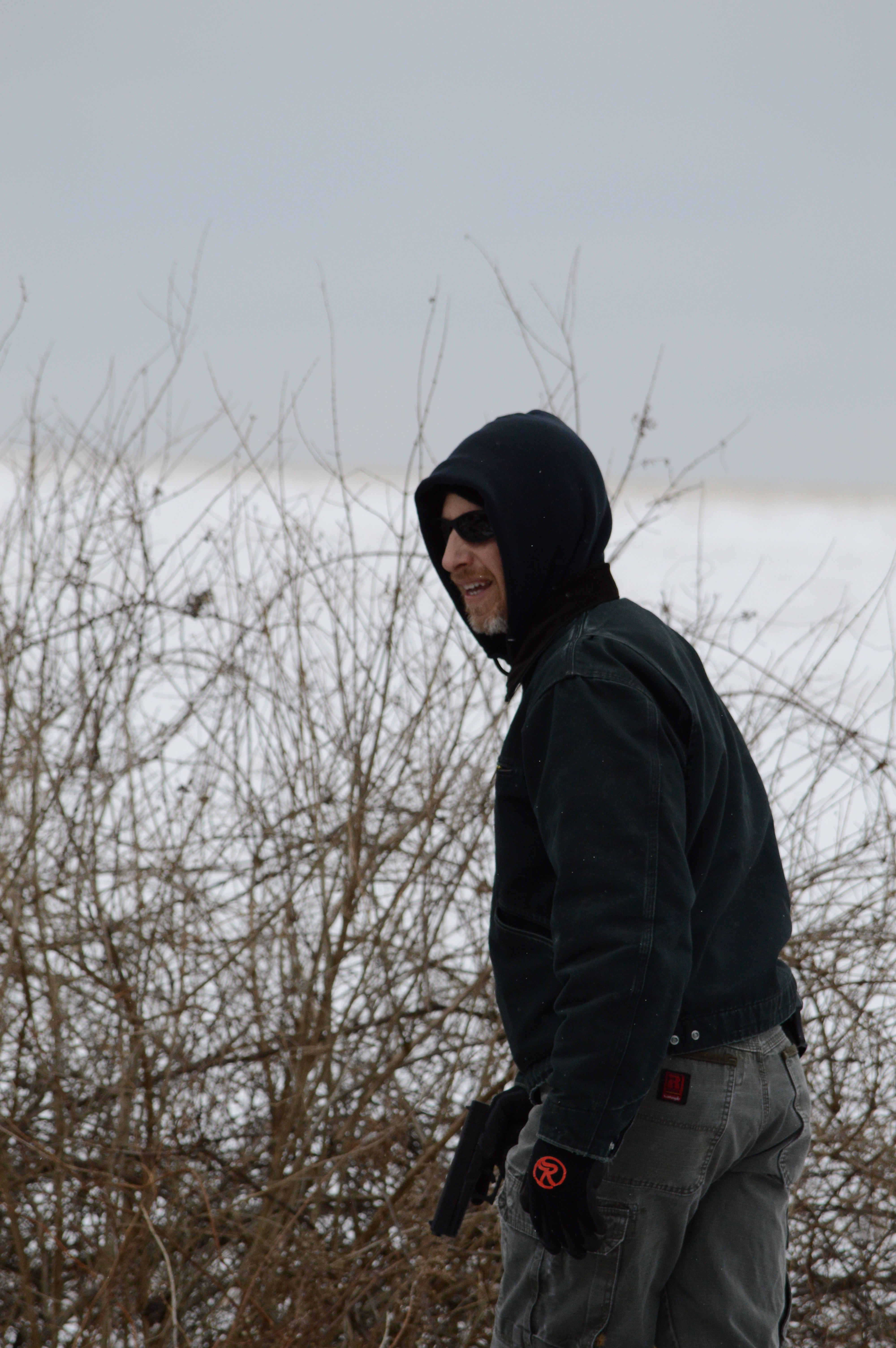
Matt on the rabbit hunt

While Billington and his cohorts in 1970 slept shoulder-to-shoulder on the floor of a tiny cabin, and Inspector Francis Fitzgerald in 1910 made the decision to turn back to the Fort, we drank coffee and chatted. We looked ahead at spring projects. We spoke in that January way about getting prepared early, making plans. One can commit to just about anything from the wood stove-warmed January kitchen. Dreams and boasts are equally successful as the frozen ground and frigid temperatures make all the contemplated activities impossible just now. Many of these plans will shrink a bit when spring arrives. When trout streams beckon and spring turkey hunting occupies our thought and time. When the real work begins and we wonder if we’ve bitten off more than we can chew. Matt takes his leave, and I am left again in the warm kitchen, windows on either side and a compelling book on the table.

My over-active brain tries to suggest other activities. Continue sorting the Holiday Closet. Parting with Christmas for another year and breaking out the non-holiday oriented snowmen and other cold and snowy decor. Now that sounds like work, and I did more than my fair share yesterday, anticipating, eagerly awaiting a sedentary Sunday. I could take a hike with Sassy June, but did that yesterday, too. A nice long walk. I could go out and fuss with the Ski-Doo, see if I can get it started for the first time this season, but there’s really not enough snow cover for snowmobiling. The two sides of my brain briefly debate, and my will to sit and read somehow overrides my hyperactivity obsession.

The dog must be let in or let out or given a snack at regular four-minute intervals as I make my way through “The Last Patrol”. Between dog demands, Doone The Cat needs to be petted and given treats and let out to be let in again later. Domestic service and dog service and cat service complete, at least for the moment, I return to the Northwest Territory and mushers making their way across a frozen tundra, or remaining pinned down by gale force winds. At home, the winds pin down the Juncos perched in the lilac. Only crows and jays can be seen flying about, buffeted by the blow, making landings like Alaskan bush pilots.

Standing again beside the wood stove, light from the south window illuminates my reading. I look up to check the feeder thirty feet away. Leaning into the window, I feel the draft between the sashes, smell the snow and a faint scent of wood smoke. This puts me at a desolate and hungry camp in the dark and cold of a January night in 1911, when The Lost Patrol began shooting their sled dogs to feed themselves and the remaining dogs. The entire entourage, man and dog alike, begin sinking into states of starvation, a hundred kilometers from respite.

Billington’s book is a modern story. Men in weatherproof clothing. Airplanes to drop barrels of dog food along the route for re-supply. Billington himself is a nurse, and with the crew are experienced guides, men that have lived here all their lives. Once a week during their month-long expedition, they will see a plane that circles overhead, checking the progress of the journey and safety of all parties. In the sled is a radio phone they could use in a real emergency. Between passages of the 1970 reneactment, Billington punctuates his narrative with corollaries to the ill-fated 1910 mission, including notes from Inspector Fitzgerald’s diary, which he kept up with until his last days. While Billington speaks of his powdered coffee creamer running low, and shares his energy-rich barley sugar candies, Fitzgerald and his party are eating their own sled dogs, boiling leather strips and bindings to eat.

Two of Fitzgerald’s men, Constables Kinney and Taylor, are so depleted, he commands they stay and pitch camp, while he and another constable forge ahead with hopes of reaching rescue and relief. Here, Constable Kinney died from starvation and exposure. Lying in the sleeping bag beside his dead comrade, Constable Taylor was overwhelmed, and took his own life.

I’m sitting in a kitchen chair and it’s seventy five degrees with the wood stove going. I sit in my pajamas and slippers and sip drip-brewed coffee, and think of these men. Try to place myself in my mind’s eye on that frigid, desolate and desperate trail. Fitzgerald’s companion passed from hunger and exposure the very evening the group split. A leader to the end, Fitzgerald folded the man’s hands on his breast, covered his face with a handkerchief, and said a prayer for him. He huddled by the fire, composing a brief will. All of his belongings were to be returned to his mother.

Billington and his party complete their trek without major incident. They intersect the early stages of construction on the Dempster Highway, and spend a number of miles sledding up the gravel roadbed. It’s a celebration of a centennial, and The Last Patrol is greeted in Dawson City like celebrities.  Festivities and feasts and a key to the city mark the end of their journey. They are eager to get on aircraft and return to their families after a month on the wilderness trail. While I draw parallels and make counterpoints between Billington’s trip and Fitzgerald’s, I don’t minimize the efforts of the modern group. It still takes a lot of work and energy and will power and maybe a little madness to set out on dogsled into the untrammeled and unpredictable Canadian back country.

In my mind I travel north and west to Canada, and back through time exactly one hundred nine years, more or less to the day. I try with greatest effort to imagine Fitzgerald and his party. The imagined world in my head is bad enough, and it pales in comparison to the real thing. There is no way to truly imagine what these men felt. The sickening realization that we are lost in a vast wilderness, hundreds of miles from the nearest human being. The horror of deciding we must kill and eat our own dogs, and feed them to the others. At the first, the dogs themselves refused to eat the meat. I wouldn’t claim to be able to imagine the desperation and sadness of Special Constable Carter, who had grossly underestimated the Northwest Territory’s ability to make every mountain and creek look the same as the next, even to experienced men. Starving, freezing and slowly dying in the dark, knowing he led himself and three others to this fate.

And alas, the great weight borne by the leader, the last to succumb, Inspector Fitzgerald. It was his error in trusting that Carter knew the way, in overriding his doubt that perhaps a more experienced guide would be required. In the final accounting, a leader of men feels fully responsible for all in his charge. Causal factors and outside forces may be observed, but for the leader, all responsibility lies at his feet.

The sky is beginning to dim. Clouds sport pink ribbons between purple patches. The dove, the jays and the juncos retire to that place they go when night falls. My journey through Billington’s book, across the windswept Northwest Territory, and following the doomed Lost Patrol, leaves me feeling as if I’d been on the trail all day. Exhausted by the schedule, spent from the many miles, I am happy just to be alive. I shelve the book, knowing the story of both these voyages will remain in my mind. Knowing that, next time I am snowshoeing through two feet of powder, a withering wind in my face, I will think of four men that never returned from their trail.

And I will say a silent prayer for them.

The members of the Royal North-West Mounted Police 1910-1911 Lost Patrol:

Constable George F. Kinney, RNWMP
Constable Richard O’Hara Taylor, RNWMP
Special Constable Sam Carter, RNWMP
Inspector Francis Joseph Fitzgerald, RNWMP

May they rest in peace.

Take care and keep in touch,


Pazlo

Fire On The Mountain

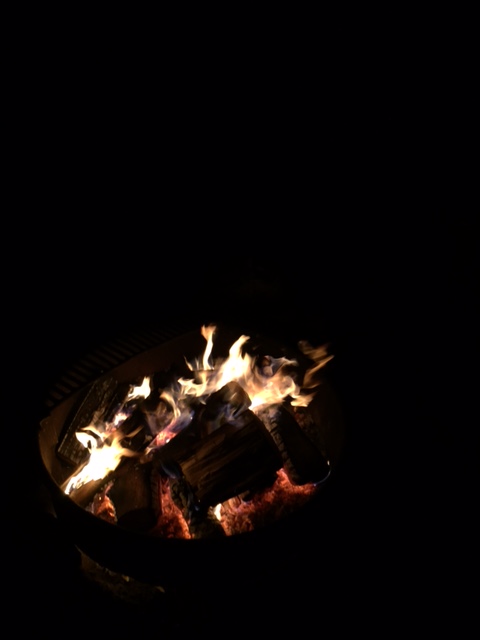
Fire Ring

In his song “The Devil went down to Georgia”, Charlie Daniels’ hero Johnny plays the fiddle on a wager, his soul for gold. He plays a medley of folk songs, and begins thusly:

Fire on the mountain!
Run boys! Run!”

The folk song referenced is nested in bygone days, a different time. It doesn’t sing “Call the fire department!”, nor “Dial 911!”. It comes from a time when there was no 911. Here on this mountain, there was no fire department. If there were, telephones do not yet exist, or perhaps have not reached the hills and hollows of sparsely populated rural areas.

It evokes a vision of mother or grandfather, one hand on a porch post, looking across the valley. Smoke is rising, not from a forest or a glen, but from John and Mary’s, or perhaps the Widow Bouck’s. The conflagration is not anonymous. We can imagine Mary’s face buried in her hands, or thankful that the winds are not blowing toward their home. We can see John, the weight of the entire world on his shoulders, face and hands blackened with soot as he beats back the burning bushes to protect his family, his farm, and every irreplaceable thing he has, no one to turn to or call on for help.

The boys arrive, perhaps on foot, perhaps on horseback, perhaps brimming from the bed of a truck we know from episodes of The Waltons, from The Grapes of Wrath.  They are farmers and millhands and pastors and barbers. By twos and threes they race without orders into the fray, disregarding their own safety. With shovels and picks, axes and hoes, these ordinary men confront the beast, shoulder to shoulder. Through the night the battle rages, and at dawn they will kneel together. They will give thanks for all that was saved, or will share tears for their losses.

In the world of 2020, the majority of people live in densely populated communities. Cities and sprawling suburbs and housing developments. Most benefit from full-time, fully-equipped, fully-trained fire departments, whose heroes are no less brave or appreciated than Johnny and his neighbor boys.

According to the 2000 Census, and I doubt it has changed much, the population of the Village of Sharon Springs stood at 547 persons. I live about three miles from the village line, in the larger tract called the Town of Sharon. It is comprised of about 1,900 people, which includes the village populace. When I moved here in 1985, we had a constable. He drove around in an older Plymouth with a big, round gumball machine-looking light on the roof. Once Phil reached retirement age, the position of the constable was dispensed with. The well-equipped county Sheriff’s department would cover the village in his stead.

Our fire department and ambulance squad are all volunteers. So it is for all of our surrounding communities. One would need to drive about fifty miles before reaching a community with paid firefighters and EMT’s. In this past year, my grandson Max began his training to join the Canajoharie Volunteer Fire Department. My sister’s parents-in-law were both on the Greater Amsterdam Volunteer Ambulance Corps. My dear late friend Jim Bixby was a Lieutenant in the Middelburgh Volunteer Fire Department. He was honored, as was my daughter’s father-in-law, with a “Final Call” via radio dispatcher, at their funerals.

We had a blow-down last week at the ranch. A twenty-foot, twelve hundred pound chunk of Sugar Maple #1 along the road frontage fell across the end of our driveway. Already a miracle, it didn’t fall six feet to the west and end up blocking the road, nor did it blow over due east, the predominant wind, which would have placed its top somewhere around the second shelf of my grandmother’s curved-glass china closet in the parlor. As luck would have it, I was only three miles away, just over the village line, when my wife called me home. Unable to use my own driveway, I parked across the road at Tom & Lynn’s. Before I got across the road, Lynn was out the door calling to me.

“Tom and Matt will be here in a few minutes. They’re setting up for Paul’s funeral.”

“That’s okay,” I replied, “I’ll just hook onto it with the truck and drag it out of the way.”

I didn’t need to inconvenience Tom or their son Matt, who were doing some of the behind-the-scenes things done for funeral services. They had just enough time to come home and change in order to attend the services for the friend and neighbor.

I went into the house to don coveralls, and before I made it back to the end of the driveway, I heard Matt firing up the chainsaw, his father advising him as to the best approach for cutting the huge obstacle. We worked together, and in less than ten minutes had chunked up and removed the fallen trunk, and cleared the driveway. Handshakes and thank-yous, and they were off to get dressed. Neighbors are such a blessing.

Lester plowed my driveway until one year, at the worst of times, his plow truck broke down, and he found himself in no position to repair or replace it. Without inquiry, another neighbor, Mike, began to plow my driveway for me, refusing all offers of compensation. This year I have my own plow truck, and have had occasion in the last two storms to cross the road and plow yet another neighbor’s driveway. Betsy lives alone and is no shrinking violet. If necessary, she would clear her driveway with a shovel. It will not be necessary as long as I am “Lester of the watch”.

It must be nigh on twenty years now since we had the chimney fire. I have no head for time and find memorization of dates and years tedious. But I remember that like yesterday. Weren’t we lucky to be standing in the kitchen when we heard the rush of the draft turn to a grumbling roar, a gut wrenching and unmistakable sound. Barking orders I commanded my wife to grab the two girls, go get in the van and drive it across the road to Tom & Lynn’s. Here they would be safe. Now I called the Schoharie Fire line, there was no 911 yet.

“O’Connor’s, Box 66A, Engleville Road,” I related the data, followed by the reassurance “They all know where I live.” It seemed I had just hung up the phone and grabbed the fire extinguisher, mere seconds later, Tony (the Sheriff) pulled into my driveway, followed closely by Lester (yes, the same Lester). Then Ray, who delivered our heating oil when we had a furnace. Then Scott, the plumber son of plumber Ruben, whose family built their modest fortune maintaining the famous bath houses of the village. One after another familiar faces arrived, threw a ladder, advised one another on the safest approach, tossed a chain down into a chimney inferno from which flames were shooting fifteen feet into the air. They knocked down the creosote, eliminating the fuel, it’s flakes ironically smothering the fires at the base of the chimney liner.

They laughed with one another as they stowed their gear, called me by name as they bade good night, drove home as if it were just another day. An hour ago I was facing the utter destruction of my home, and in minutes these ordinary heroes saved it all without a drop of water.


Blue Light Flashing

The rising wail of the whistle is heard three miles hence,

It quickens one’s pulse,

fills the hills and valleys, an echoing plea,

“Help!” it’s crescendo cries “Help!”.


Leaving us to wonder and worry for whom the alarm is raised. 


In an instant we see them.

Family sedans, compact cars, and pickup trucks from the farm hasten past,

Blue Light Flashing.


We see neighbors racing headlong into danger without thought

Of reward or return, offering up their own safety,

To help neighbors in the grip of calamity.


With great gratitude for one and solemn sympathy for the other,

We pray for both.


Bless you, all you boys (and now girls, too!) who respond to the call: “Fire on the mountain!”

Take care and keep in touch,


Paz

After The Rush


Edge Of Night

The Christmas tree beat a hasty retreat this year, as it had dried out considerably and begun to drop needles by the branchful. The furniture has been restored to its pre-tree positions.  The annual tradition of New Year’s Eve At Pop Pop’s was a grand success, and the kitchen floor became inundated with marvelous sparkling confetti. The ball dropped in Times Square, and just like that another year ended. We started the New Year with another tradition: double-team vacuuming.

Now this weekend, finally, I will catch up to the tide of the paper calendar. I will lovingly yet grudgingly take down the big C-9 lights and their garland from the arches of the front porch. I will carry boxes of remaining decorations upstairs and scratch my head at the condition of the holiday closet, looking like a post-Christmas bargain-basement sale aftermath. I will walk through the house a dozen times scanning for red & green, silver & gold, and I will still miss a few Christmas-y items that will be noticed later in January.

And then—quiet.

Though most of the snow has faded in the past couple of weeks, we don’t doubt that Miss Winter is still encamped. The dog’s water dish remains frozen, and the dog bones frozen to the ground in the driveway. Opening the door to let the cat in or the dog out results in a blast of icy air, making us quickly move the six feet to the front of the wood stove to recover. Windows are dressed in the raiment of the season, heavy drapes drawn closed at sunset. Doors sport draft stoppers, and the down ticks come out for the beds.

Closed windows and doors, drapes and draft stoppers seal us into our winter haven. The steady purr of the motors of the pellet stove provides a background noise, the television playing its counter-melody. And this is the soundtrack of real winter. The balance of days not filled with Jack-o-lanterns, festive pumpkin pies, turkeys and trees and gifts and Times Square. Now, as sunsets hover not long after four o’clock, we may cast our eyes to Siberia, and watch Doctor Zhivago as the ice paints our windowpanes to look like the ones he peers through.

Outside, in the Great Wonder, few sounds disturb Sassy June and I as we traverse our trails, our most familiar and beloved paths. Scrunch-scrunch of snowshoes. The wind in the pines. The sweet and spirited song of the tiny chickadee. We may chance to hear a chainsaw across the glen, or perhaps the sound of a couple of snowmobilers riding up the abandoned rail bed, over the hill, past our Wonder Woods.

In the pine stands now, hundreds of robins will perch at sunset, root around and roost there. We ponder their behavior. Aren’t they supposed to hide until spring? How will we know when spring has truly arrived if the robins remain through the winter? They must be late in their trek. Everything has been a step behind this season, and we all blame it on a late Thanksgiving. I’m not sure how the robins found out about it, but the Canada Geese appear to be taking their time as well. One could hope this would mean the rest of our winter may be mild. Corollaries of previous years indicate, in fact, the birds may anticipate a late spring.

And that would be agreeable to Sassy June and I. This next stretch of time is not metered out for holiday parties and days spent decorating (or undecorating), not punctuated and perforated by dinner at daughter’s or the Christmas Bird Count. These few and precious weeks ahead represent our time to have the Great Wonder, The Magic, the Wonder Woods all to ourselves. No mowing required, nor the time spent doing so. No distractions take from our time. No lazy river and a boat that wants to sail. No summer ponds filled with lunker largemouths. No invitations to pool parties or patios. No bugs.

Just a snow-covered trail, a man, and a dog. Woods we can see through, without those pesky leaves. Icy gusts that keep others at bay. Gold and purple sunsets.

We bask now in the glory of true, quiet winter. After the rush and before the spring. We’ll be out there in it, Sassy and I.

You come, too.

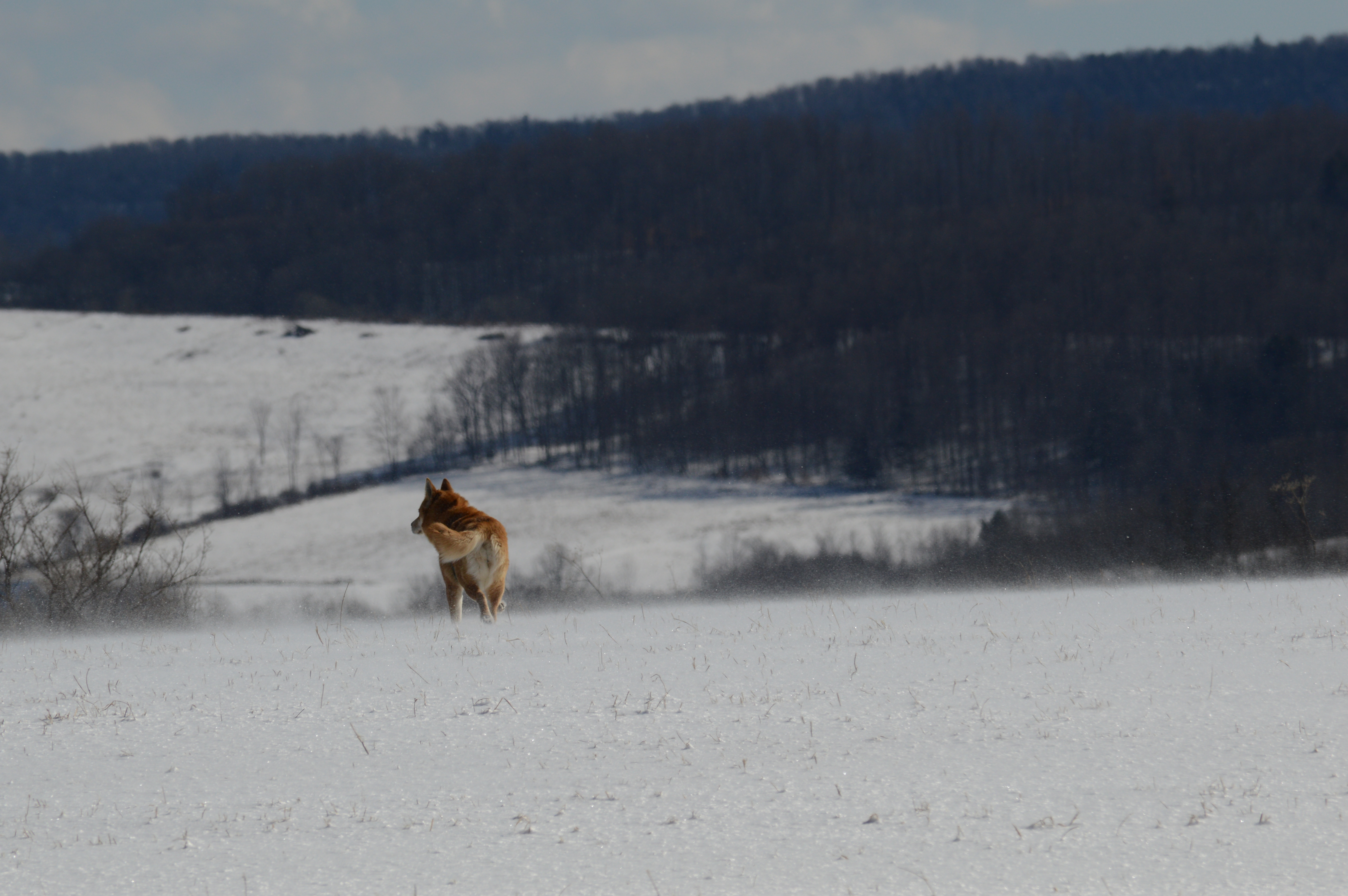
Sassy on the Widowmaker

Take care and keep in touch,


Paz

Seeing Season

Rolling along into December, we’re less than two weeks from the pivot point, the winter solstice.  Henceforth, days begin to grow longer. Winter walks are often drawn to a close as the sun approaches the horizon, and as we doff our boots and harnesses (depending on species), we note that it is hardly past four o’clock!

Ryan and I struck out Saturday for a snow shoe hike around a short trail not far from home. I related to him how I call this stretch of winter “The Seeing Season”. While pine stands remain impenetrable, deciduous trees ditch their leaves, and we can see so much that is blocked from view for half the year. We had a fresh snowfall recently, and this gave us many interesting and beautiful sights to behold. The sun danced in and out of sight between falling snowflakes. We stopped at the lean-to for coffee.

“Oh, I have coffee!” I said, realizing I left the full Thermos in the truck.

Ryan produced two ceramic mugs from his pack, and poured steaming black coffee in each.

“It’s not about having coffee, Dad.” he said as he brushed a foot of snow off the picnic table, and stepped up onto the floor of the lean-to. “It’s about doing this.”

I let the this of this moment engulf me, appreciative of the reminder from my fellow outdoorsman and armchair philosopher. The coffee was good, too.

Back at the ranch, I plowed the snow from the driveway. Not half-way through December and the snow banks are five feet high already. A warm spell forecast will knock them down a bit.

The big C-9 lights are up on the arches of the front porch, and the little Lantern Bear has donned a Santa hat. Inside, rooms become inundated with reds and greens. Table runners and tablecloths and place mats in themes of Christmas. The stockings are hung in the parlor. On Monday, son-in-law Kenyon would deliver the tree, and our late start on the holiday is well underway.

Merry Christmas!

Here’s hoping you get a chance to get out in the seeing season. If you don’t have snow, come on up. We have more than enough to spare.


Take care and keep in touch,


Paz

Falling


Autumn Glow

It begins quite subtly, this big show. Starts way back in late August, when the Swamp Maples are first to conclude the end of the growing season draws near. They fly their red flags in swamps and bogs, and some folks probably just think they are dying trees, drowning in the muck.

As days pass, each one growing incrementally shorter, the tide begins to turn. Sumacs begin to turn the color of red wine, Sugar Maples will begin to show yellow, then reds, then burst into gold and orange. The demure Cottonwoods eschew the attention, quickly going from light green to tan, then brown as dirt. “No pictures, please.”

Sometime in September I begin to be on the lookout for the curious fungi of fall. One day they are not there, then suddenly they are. Some simple toadstools in colors of yellow and orange and red. Some in unusual shapes and deep brown. As I mow the lawn I discover them, and I scold myself for running them over. I stop to look, though they are the same as last year and the fifty years before, and they aren’t exactly what one defines as pretty. Still, they are regular visitors, part of the whole rolling year that comes around just once. I am glad to see these reliable friends again. As quickly as they arrived, on the next round of mowing, they are gone.

The big Maples that line the road frontage are our main source for leaves. We need leaves. We stockpile and hoard leaves right up to the big day of the Leaf Pile Party. We’ll gather all we can, hopefully with plenty of children. We’ll put out cider and eat donuts. Maybe chili if it’s cold. Then we will pile the leaves, higher and higher. As tall as granddaughter Maddie, twice as tall as grandson Evan. We’ll use the big steel ruler to determine the height. Have we set a new record? I believe it is 56 1/2 inches.

Then the throwing begins. First we throw bushel-sized armfuls of leaves at and on one another. Then we grab up children of throwable size, and pitch them into the pile to squeals of laughter. Then we’ll burrow deep within, hide ourselves, make the dog a little crazy wondering where we went (or in Chuy’s case, he would come to save me). We’ll have leaves in our hair, leaves in our mouths, leaves down our shirts.

These simple pleasures will occupy much of a day for us. A day to be outdoors, seeing and smelling all that makes fall. A day to join together for a party without a cake. It is not without a guest of honor, nor gifts. Our Guests of Honor are the leaves themselves, and they bear the wondrous gift of gathering and joy. Joining hands and hearts with nature.

Mother Earth laughs with us as we celebrate the closing of the growing season in North America. She will shine her warm sun on us, or perhaps cool us with a breeze. She will drop one by one and two by two the few remaining leaves of the ancient Sugar Maple, falling like confetti on our festivities. She will paint the sky gold and orange and red to match her trees. She will thank us for appreciating the million or two leaves with which we play for a day. She is glad someone does not see them as litter to be removed, but as playthings to be enjoyed.

Long after the guests have gone and fall cedes the stage for the next set of seasons, I will find on the Great Lawn a large circle of crushed-leaf carpet. Until the snow covers it, and sometimes still in spring, as I mow I am reminded of the day and the season by this memory quilt.

I will see smiles and hear laughter. I will smell all that Fall Air brings to me. I will revel in the memory of a chilly day filled with warm hearts.

And two million of our closest friends.


Take care and keep in touch,

Paz


Harvest Season

Farm Stand


Personally, I don’t set much stock in calendars. Clocks, too, are something I would rather live without. I am enslaved to the clock only when it is for the purpose of being considerate to others. To arrive at work or a party or dinner when expected.

The calendar, in humankind’s inimitable fashion, seeks to quantify and organize and lull us into some illusion of control. Earth laughs. I can’t abide by the declarations that this or that date is “the first day of…”. Spring, summer, winter, whatever, is not going to be corralled so. Now maybe these dates are correct for someplace that is exactly centered between the Tropic of Cancer and the Arctic Circle, and longitudinally centered from seacoasts. So, somewhere in the middle of Missouri, I would guess, these dates might be close. For anyone that lives anywhere but the center of Missouri, these shift a smidge.

As any regular reader may know, I can’t pigeon-hole the seasons of my world down into four categories. There are a thousand seasons in any given transit of our orbit, and they overlap and blend, coincide, peacefully cohabitate, and usher one another in and out.

Season’s End

Now, we thrill to Harvest Season. This is one of the longest and finest of seasons, and literally bares for us the fruits and bounty of our world. Really it begins way back in June. The earliest harvests are June-bearing strawberries, horseradish, bouquets of peony. Production cranks up during the period declared “July”, and every manner of food and flower fills the stand at Parson’s Farm, while the farmers themselves continue their frenzied scurrying from field to field. In August, the longest-awaited treasures are pulled from the rich soil, picked from their heavy vines, plucked from their thorny canes, all to a steady chorus of buzzing bees, celebrating their own harvest.

There is an inherent beauty in this cycle, this work. Of bending one’s back to commune with the soil, to nurture and care for these tender shoots with the love of a mother and the patience of Job. To trust and to dream that these fragments will grow and mature, that our efforts will yield their worth. And each year, Mother Earth grants these humble wishes. For thousands of years, humankind has marveled at this feat, thanked the good green Earth, languished in the beauty and scent of her floral raiment. There is something timeless, something unbreakable about these acts, this farm life. The Cosmos doesn’t give two shakes of a thistle down about your TV and your internet and your cell phone. That little seed is following its own program, recorded millennia ago, evolving and changing only when necessary. You can high-tech the living daylights out of stuff, including your farm machinery and your milk houses, but that seed is entirely unimpressed. Nothing you can do will hasten its march toward maturity.

Harbinger

There was a time when nearly everyone was a farmer. Even in the stifling crowded cities, homes had a “kitchen garden”, sometimes wedged into the tiniest slice of terra firma, a remote landlocked island at the bottom of brick and glass and steel canyons. Here would grow thyme and garlic, carrots and sweet peas. Rosemary and rose hips, rosy red radishes, Swiss chard and kale, iceberg lettuce, cucumbers and green beans. Every child knew how to weed. I suspect if you asked children these days, I mean big enough to know, like ten years old, which fruits or vegetables grow in the ground, which on stalks, which on vines, which on trees, they’d be hard pressed for answers. It occurs to me that this might also apply, in these techno-modern times, to many adults. Occasionally it will occur to someone to ask “Do you know where your food comes from?”

Nature’s Candy

September the first. There. Just the words conjure an image, don’t they? Our overly organized, over-sized and overly analytical brain connects dots on a fuzzy-logic web in our minds, and a signal flare is launched: SUMMER HAS ENDED. Back-to-school, starting college, Labor Day.

Such hogwash. Summer is in full bloom in September, and in fact it is the very essence of Harvest Season. It comes to all the land, not just humans and their farm stands and their grocer’s produce section. Bracketing the explosion of spring birthing, trees now finish the last movement of their long, slow opera of procreation, as mature nuts, seed pods, fruits and cones fall to the fertile ground. Harvest Season now for squirrels and bears and birds. Whole lifetimes and life cycles are lived at a frenetic pace for the curious seasonal fungi of fall.

Beneath The Pines

We knew all this more intimately in the old days. Before Clarence Birdseye flash-froze every edible imaginable. Before refrigerated boxcars and freezer trucks. Harvest took time to bring in, to process, to can and store in the root cellar. And after all the preserving was done came the slaughter of farm animals. Some to be smoked or salted, some to be pickled.

Becker’s Babies

By the time all that work was done, Harvest would have given way to the next overlapping and concentric backdrop of seasons. And we decided this was now a time to rest a bit. To enjoy and celebrate all that Harvest brings to our hearths and homes. To eat some of those wonderful prizes, and in particular, a bird that would not be overwintered. Surrounding the turkey would be the great and generous bounty from Mother Earth. We will sit together and give thanks for the full cornucopia.

Festive Table

We’ll call it Thanksgiving.


Take care, and keep in touch.

Paz

The Ark: Windows

From My Window


All of the windows in my 113 year old farmhouse are original, except for the one new triple-track aluminum deal in the kitchen that looks out onto the driveway. Much of the glass is original, too. “Albany glass” they call it around here, but in other parts of the country it probably has other names, or perhaps the name of the town where the glass factory stood. The old glass has ripples in it, actual wrinkles you can feel with your fingers as they pass over the otherwise smooth glass. And bubbles. In some places, quite a few tiny air bubbles, and in other places, individual larger ones. I’ve had to replace a few panes of glass during my 34-year tenure caring for the Ark. It always makes my heart ache a little when I must break up and throw away this antique glass.

The lifting and latching of the windows brings a mixed bag of the original workings. A single spring-loaded latch is in the center of each lower sash. On some windows, the ancient cast iron pieces within have cracked and broken off, and the latch does nothing at all. These windows get propped open with retired curtain rods. On a few of the windows, the latches still work. Most probably had window weights concealed within the window frame. A rounded length of iron about the diameter of a cigar, usually about a foot long. These were originally attached by sash cord, long since decayed within its wood confines. The window weight would offer a counterbalance, an assist to lift the window as well as a resistance to slow the sash’s descent.

They are as inefficient as one would expect an original 1906 window to be. Pretty sure I have actually seen tiny crystals of snow driven through them in the height of a winter’s blizzard. In the frozen season, condensation on the inside of the windows often freezes on the glass. Whenever we see this, we call it “Zhivago glass”, as it reminds us of the scenes in “Dr. Zhivago”, when he and his charges are holed up in Siberia. Giving it ringing names and associating it with the stark beauty shown in the movies helps distract us from the fact that the window is no better than the one Zhivago looked through in 1890.


Juney


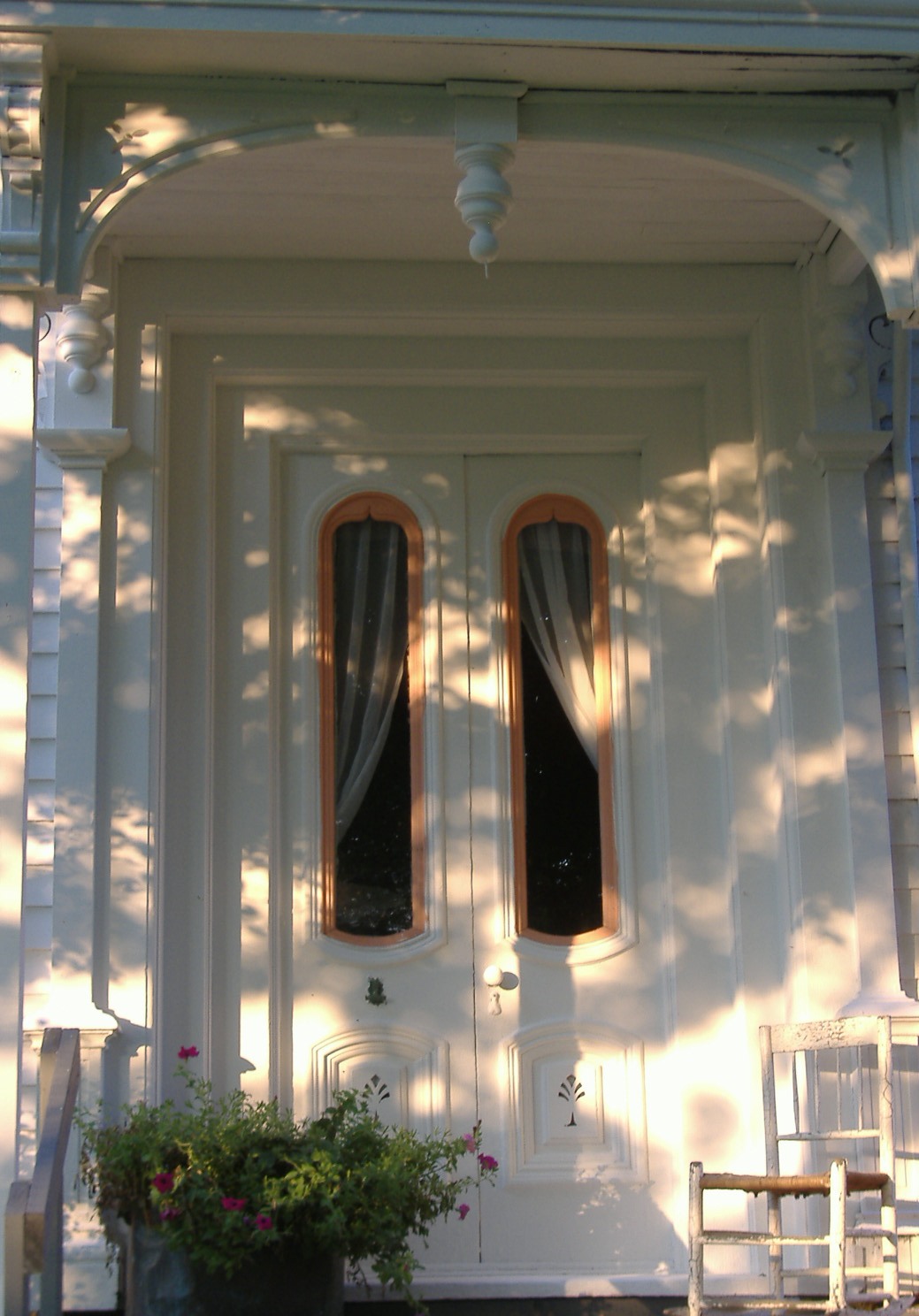
The windows are large and ornate. Houses don’t have large and ornate windows anymore, just vinyl rectangles. The tops of the windows out front are rounded. 10 round-top double-sash windows frame the coffin doors, with two round-top lights of its own. (“Coffin doors” refer to the main entrance at the front of the house. ((We call that “the dooryard” around here)). One door is used most of the time, the one with the doorknob. The other side of the double door was intended to be opened to bring a coffin into and out of the house. When it was built, this is the way funerals were done in the sticks.)

We had a sales person call on us to pitch us custom vinyl replacement windows. His first shock was the sheer number. For living spaces alone (excluding the “attic” windows) there were 18 of them. He measured and calculated. Were we sure we wanted them the same size? “100 united inches” I think was the term. Surely we would want a standard, smaller vinyl rectangle? Less expensive and more energy efficient. He choked a little when quoting the price (more than twenty years ago) at $18,000!

Okay, last thing, window guy. You know your custom windows that are made-to-order to fit the openings in my home? Well, will the ten out front have the same rounded tops? Well, not exactly, window guy says. We could fashion a mask for the outside that evokes the shape of the round top. Nope. Stop right there.


The Coffin Doors


There is a tremendous beauty in these windows. Like most things I love, their inherent beauty is the attractant. Not efficiency. In the fall, I make my rounds to each one. A couple of screws jammed in the sides will hold the lower sash tightly against the upper. Then rope caulk is applied to the gap. In the spring, I visit each again, removing the caulk and the screws. Flinging them open, however briefly, symbolically putting winter to bed.

I could have had eighteen modern, efficient vinyl rectangles in these places. A lower heat bill. No need for rope caulk.

In June I will go upstairs and open the front and back windows in the center hall. This is the official start of summer for me. Breezes will move through, and birdsong. And the smell of the rain, and the sound of the neighbor’s birthday party across the road. The rumbling of summer thunderstorms, the voice of the wind in the leaves of the great maple trees which tower over the two-story house. In spring, the sound of the robin leaping from the nest it has built atop the window frame. In August, the smell of the third cutting of hay, drying in the field adjacent. The smell of the diesel tractor crawling up the road with a wagon of hay bales stacked impossibly high. The sound of lawn mowers and dirt bikes and dogs barking.


Windows go both ways


In the peak of the summer heat I will go upstairs to fetch something. At the top of the stairs I am met with a unique fragrance. It is the smell of a very old house. Century-old wood. Horse-hair plaster over hand-cut lath. Ancient wallpapers. It smells of all the things it has always smelled like, and not unlike the attic of my parents old farmhouse. I can’t know how much longer I will be in this house, or in this world. But I know in the meantime I will delight in that old familiar smell of an old, old house owned by old people. Unchanged but for those few places where it was deemed absolutely necessary. And my kids and grandkids will share this experience. This smell. This old Ark.

And until I go, you will not smell vinyl. You may be a little chilly in the winter. And you can look out at ancient trees which are as old as the wavy, bubble-filled glass you are looking through.


Take care, and keep in touch.


Pazlo

April’s Fool

Last Of The Snow?


Yep. Fooled again.

Why would I put away snow shovels prior to…say, June?

And the pellet stove. Was I really down to my last bag of pellets on April the 20th, when the temps dropped well below freezing? Yes, yes I was.

April is a trickster. One day the sun is shining and daffodils are blooming. The next, the wind is blowing at eighteen miles an hour, and with the wind chill, it feels like 24 degrees.

Every year we are fooled in this way. Lulled into believing winter is over, until- BAM!- a spring snow. Then we think it’s cold and the heaters are on, and next thing you know it’s ninety degrees in the house. Heaters off, doors and windows open.

So I left the snowmobile on the lawn, hoping for one last ride. I parked it on six inches of snow, and it looked pretty normal. Now all the snow has melted away, and the Ski-Doo looks like some abandoned machinery. A steel and fiberglass lawn ornament. Now, before I have the sled put away, the grass is already six inches tall and it’s time to get the Deere out.

Maybe I should just put skis on the John Deere! Then I wouldn’t need to switch back and forth between machines. (And it would be easier than putting a mowing deck on the snowmobile.)

That’s what I need. A universal all-season machine. A mower deck on the bottom, a brush hog on the back and a snow plow on the front! Now if I can figure out a way to pull the boat behind it…

Grandson Max and I went last weekend for some spring fishing. We headed to Cobleskill Reservoir just after sunrise, and worked our way down the bank and toward the lower holding pond. I pulled three nice bass from the water, fifteen-inchers, while Max went fishless. At the second pond, the upper Holding Pond, Max met with success in the form of some feisty yellow perch. The lower holding pond is stocked with trout from New York State’s Department of Environmental Conservation. The Van Hornsville fish hatchery is just twenty minutes from home.

Spring On The Pond

At the lower pond, we had company. A couple on one side, a guy on the other, and a small group of kids throwing spin casts while dad plied the fly rod. At first, I said “follow the crowd” to Max. “Maybe they know something we don’t.” Local folks usually know the best spots. We fished this water for a short time while I made some observations. No fish. No minnows or fry swimming at the rocky shore. No crayfish (often in the form of retired exoskeletons). There were no plants growing in the water. No green slime growing on submerged rocks. I watched the other eight or ten people, all fishing simultaneously without result.

“There are a lot of lines in the water, but I haven’t seen anybody catching fish.” I said to my partner. A wood newt slowly swam by, and I pointed it out to Max. I wet my hand and reached down, scooped up the little salamander, and told Max to wet his hand before I placed the little brown newt in it. He looked it over and released it to the water.

“That’s the first living thing I’ve seen in here.” I observed. “This water is too clean. Lifeless. Sterile.” We headed back over to the Perch pond. While sitting there, a baby beaver swam the length of the shore before us. We’d make a move to grab a camera or call to one another, and it would submerge, to surface again fifteen or twenty feet away. It was a little thing, about the size of a cat. (Beaver can grow quite large, in the 60-pound range, as big as a medium-sized dog).

We watched a squabble between two male Canada Geese, vying for a mate. We saw an Osprey fly over and drop to the water after a fish. A Bald eagle soared high above, and wandered south toward the ridges of the hilltops. We saw a Killdeer walking on the grass before us, and watched closely where we stepped to avoid its nest.

Killdeer In The Grass

My first fishing outing of the year, a success all around. Fish for both of us, beautiful scenery, some interesting wild friends, and no one fell in the water.


Take care and keep in touch,


Paz
Mud Season

Juney In The Mud

St.Patrick and the Easter Bunny have their work cut out for them if they want to reach the door of our house. Better be wearing some muck boots.

My house is around 1130 feet above sea level, and up around 1200 feet is Engleville Pond, and a few feet higher is the Corporation Pond. They are situated right across the road, perhaps a half mile away. Well, water runs down hill, you know. The main water line from Engleville Pond, which is actually a reservoir for the village drinking water, runs right past my house and on to the water tower another mile and a half away.

When I first moved here, there was a faucet sticking out of the ground out by the shed. One day when I was enjoying the thrill of home ownership, in this case replacing my deep well pump 70 feet below us, I noticed the trickling, leaking faucet was still running. Well, it turns out that it was a tap from the big water supply line. I guess when they put it through here and tore up Mr. Baker’s property, they offered folks a tap from the line. Mr. Baker raised pigeons and kept a couple of farm animals such as a cow and turkey, so the water supply was welcomed.

About ten years ago, the guys from the village came by and asked if I still used the spigot out back. Turns out they were looking to reduce leaks in the mainline between the pond and the water tower. I assured them I could get by without it, and civic-mindedly agreed they could shut it off and remove it.

Ever since then, especially in the spring, we have quicksand in the driveway. I don’t mean mud, I mean quicksand. Real quicksand like in the movies where it sucks people in to their imminent demise. One year I thought I’d fill the “soft spot” with some solids, to build it up. I sank about a half-dozen bricks into the muck, and they disappeared out of sight. Haven’t seen them since. A few more rocks and wheelbarrows full of gravel all met with the same fate.

Over the weekend, I was out in the driveway, trying to squish flat all the ridges and ruts in the quicksand before May comes along and dries them out and turns them into curbs. A long time ago, almost twenty years now, I guess, I had Pomella Brothers come over with their backhoe and dump trucks to work on the driveway. I had them sink drain tiles in it, from the center, draining out to the ditch at Engleville Road. This seemed to help a bit when there was four inches of stone on the driveway. By now, it’s difficult to pick out the areas where the stone laid. In a few places it’s still gravely, but there’s a sort of swirl shape that leads to the quicksand hole, like gravel circling slowly down Earth’s drain.

When we first moved here, I presumed this was just a brief spring melt-off thing. We’d place planks at the top of the driveway so one could proceed to the back door over a boardwalk. After the boardwalk sank into the quicksand, I realized the problem was a bit bigger.

Finally, I called the village and asked if there was anything they could do. My cellar looks more like a koi pond, and has frogs living in it. I almost reported my daughter missing, thinking she sank into the mud, until she showed up later in the day. We were missing a couple of cats, too.

Well, digging up the main line to prevent the mud in my driveway was not something the village was enthusiastic about. More accurately, it took several minutes for the guys (I was on speakerphone) to stop laughing enough to talk to me.

No, they really had no way to check for leaks underground. If interested, I myself could personally buy the $38,000 ground-penetrating radar system used by large municipalities for just such occasions. Otherwise, they suggested, perhaps I should relocate the driveway to the other side of the house.

Oh, and by the way, I was reminded, I would need to call Pete, the local codes enforcer.

I am required to have a permit to build a boardwalk or a koi pond.

Quicksand holes, fortunately or unfortunately, depending on your perspective, are not regulated by the local authority.


Stay dry, and wipe those feet (and paws)!


Paz