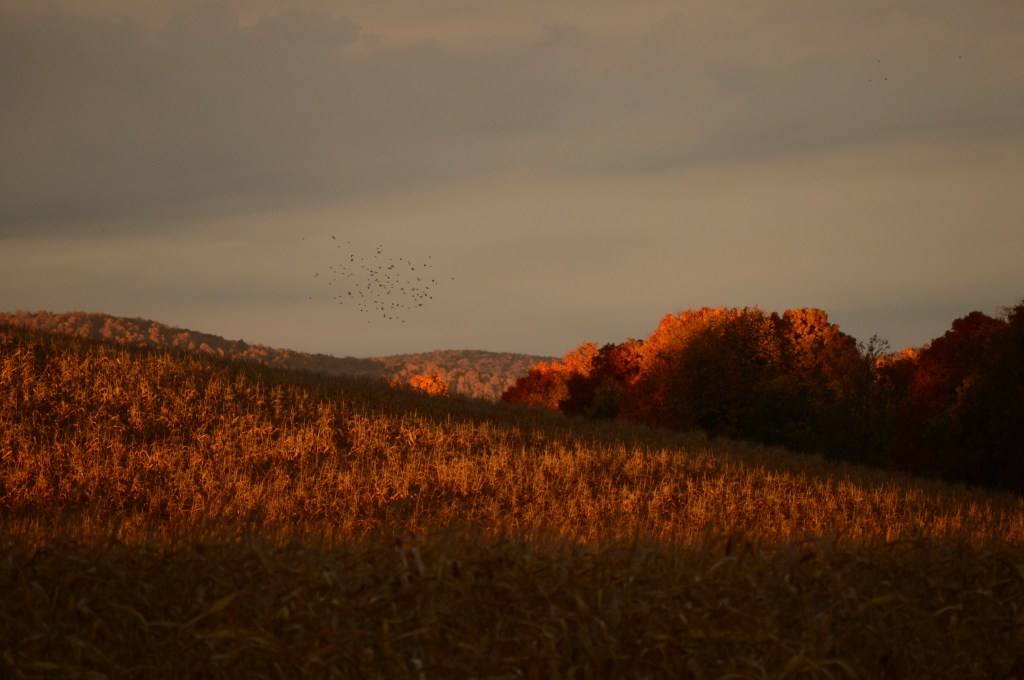
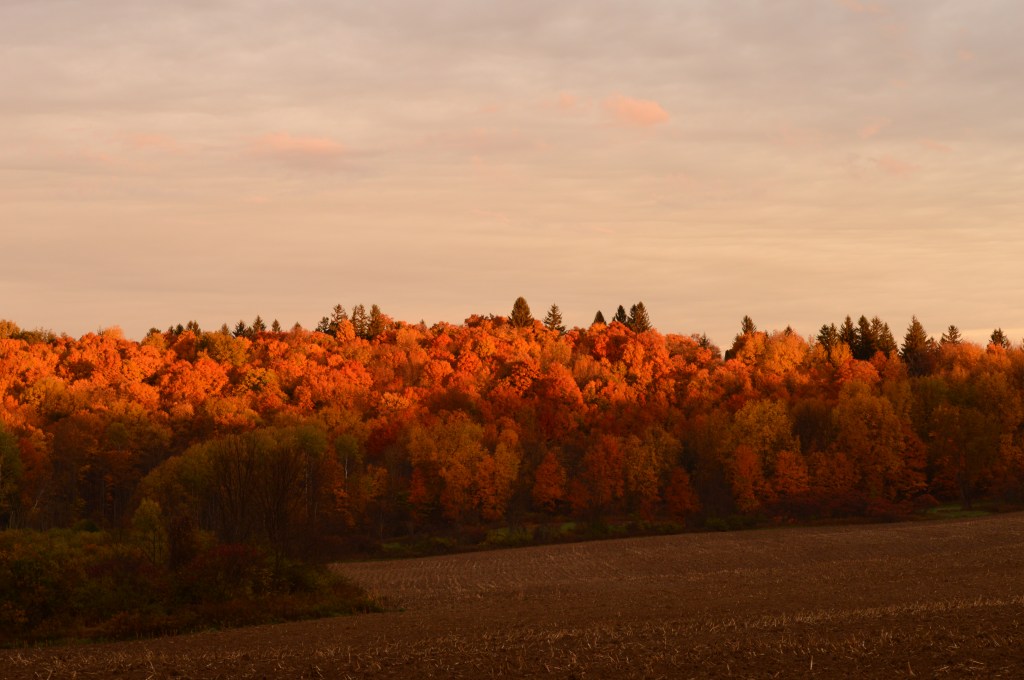
Oh! To be that Canada goose, And see through those geese eyes That patchwork carpet below arrayed, All Nature’s vainglorious color displayed, As I fly through blue-grey October skies.
Hello?
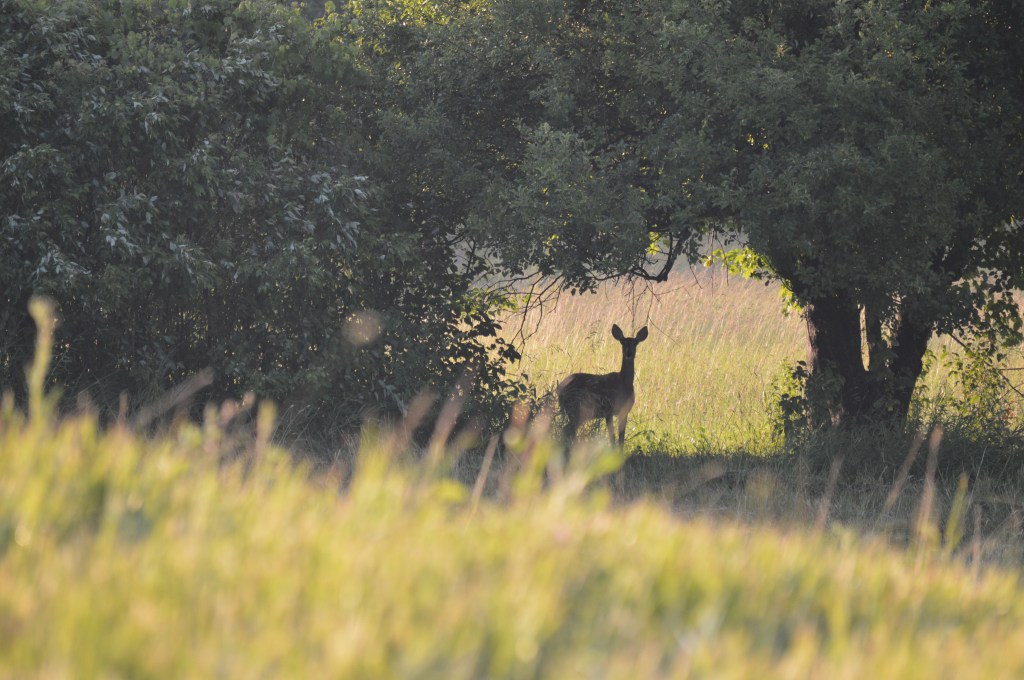
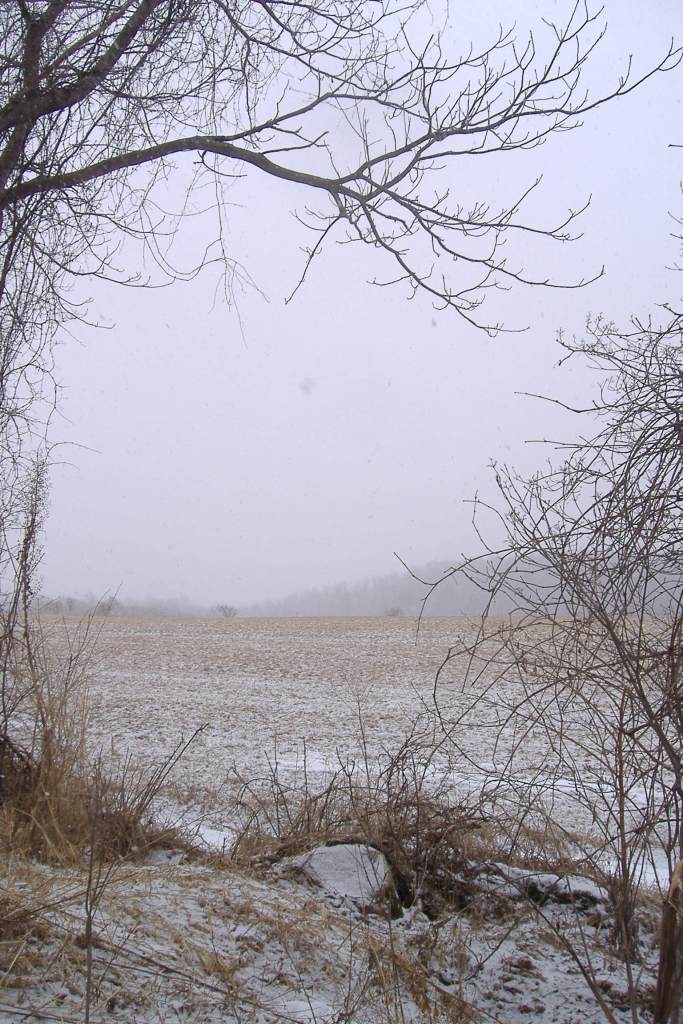
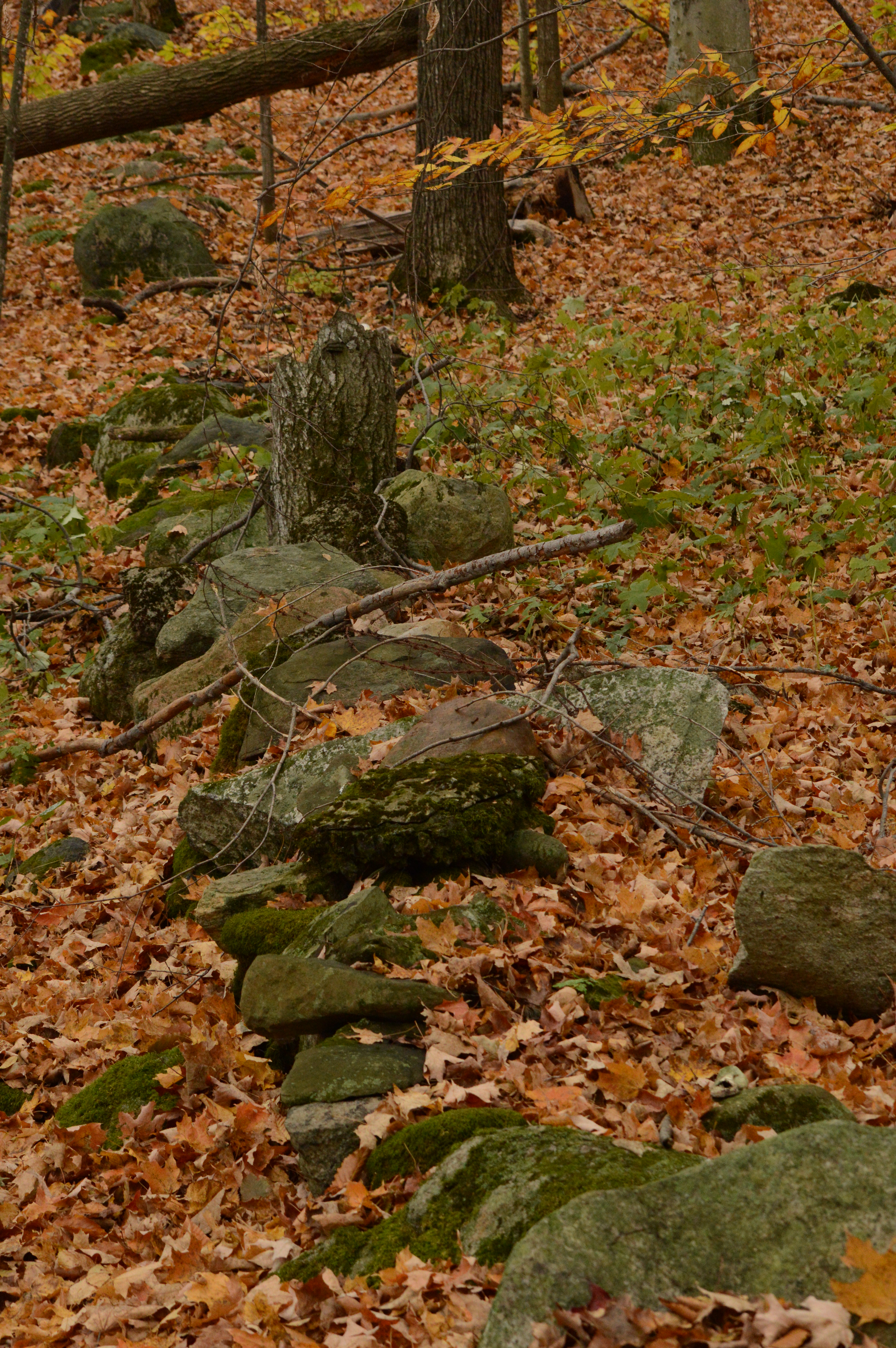
Ah! To be that white-tailed deer, Who browses ‘mongst the elms and pines, And walks the tumbled-down rock fence lines, As I bid the first snowflake “Appear!”.
North Loop
Ho! To be that fox of the glen, Seeking all manner of food and forage To fatten his flanks with winter storage, When the drifting snows will surround my den.
Evan James
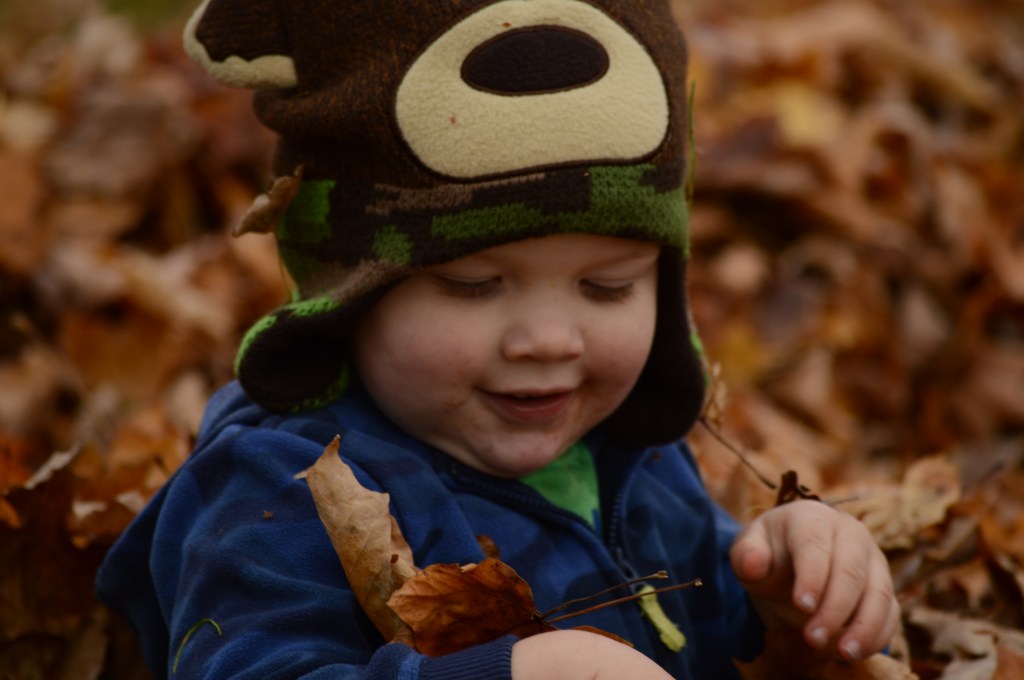
Alas! To be that little boy, Raking leaf piles, carving pumpkins, Stuffing a scarecrow country bumpkin, Breathless with Halloween joy.
Sassy June pulls me from the heat of the July sun into the shade of the hardwood stands. The aged forest has grown tall, a great green canopy enshrining a clear understory that has lived wild for decades. Here the sorrels and trillium and wild gingers spread horizontally more than vertically in their efforts to gather the sparse light of that brief season of green.
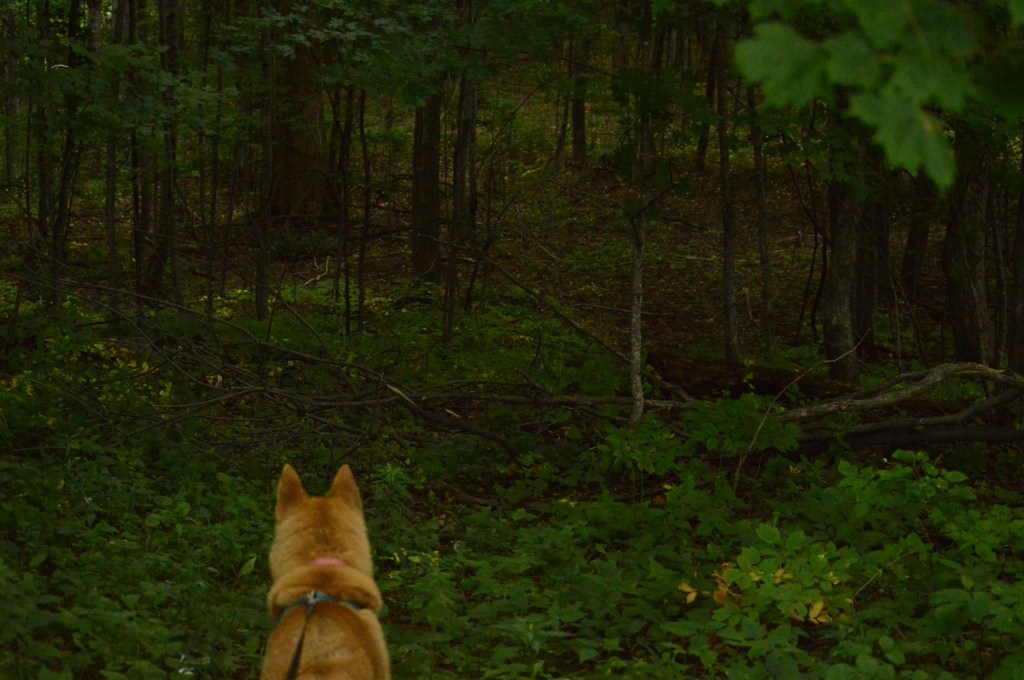
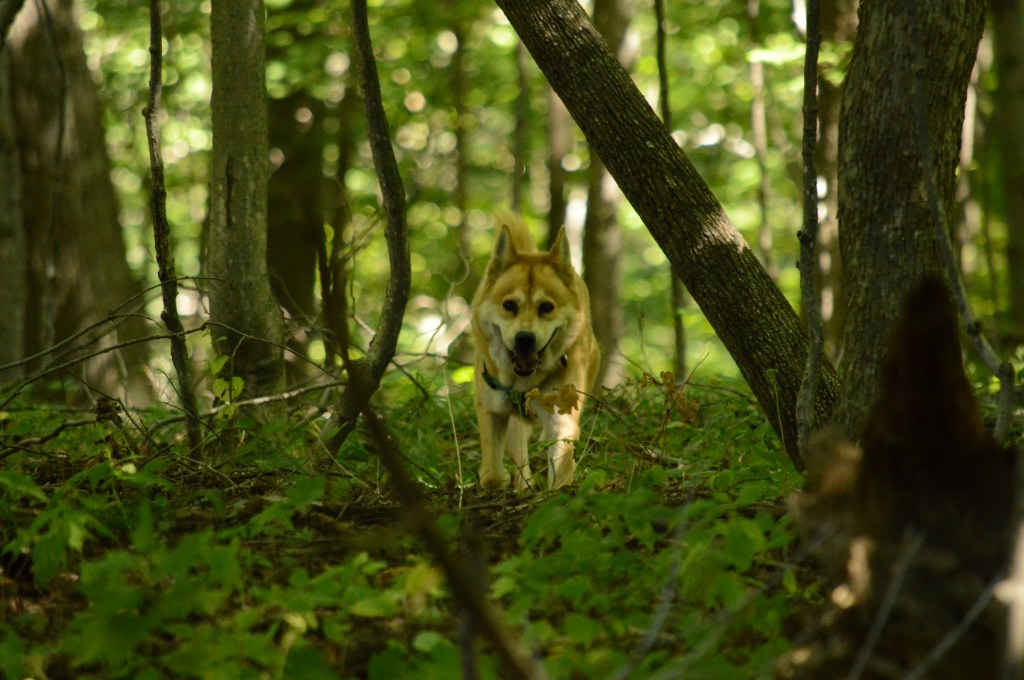
Juney is mostly Husky, and it is in her nature to keep moving, keep trotting. All day if necessary. She’s given the broadest rein possible, and chooses our course, though it typically traces a sort of route that is comprised largely of our trail system. I follow along dutifully, at a quick, almost-husky pace, my eyes glued to the earth seeking my next footfall, or winding in zig-zags through saplings in pursuit of prey. Occasionally, my canine companion will hover and orbit around a rotten log or scat pile of particular interest, and I am granted the opportunity to raise my eyes.
Wild Lilies
On this occasion, on this perfect Pinnacle Day of July, Sasha and her nose have pulled me down from the crest of the hill at the trail’s entrance to the wood. Down through the little hollow that bends its way slowly to the banks of West Creek, an isolated stretch where it winds between the hardwoods and the swampy wastelands behind the hayfields. This place sees more raccoons and bears than humans or dogs, but we are equally welcome, the chortling water seems to say. As my furry friend excavated a dead beech stump, I was enraptured by the verdant glen in which we stood. The floor as far as one could see was covered with the low-growing emerald green of the forest. Above, the tops of gargantuan trees swayed and creaked in the wind, the blue sky and dappled sunlight trying to peek through the thick canopy.
Perpetual Motion
I gasped at the splendorous beauty and peacefulness of this place. “Eden!” my voice broke the quiet of the wood, and I was nearly startled at the utterance. “Am I dead?” I asked myself (not for the first time). “This is Heaven, or we have found Eden.” Snazzly paused just a moment and looked at me, then returned to digging. The grandeur of this simple glade was overwhelming and defies description, and I examined it closely, finding it to be the very picture of what we see when we think of that garden of perfection inhabited by Adam and Eve.
My spirits were buoyed by our walk in the Wonder Woods, which is so often the case, and upon our return to the homestead I couldn’t help but to continue thinking about how fortunate and grateful I am to live in such a place. We took to the south porch for sunset that day, and I gazed out on the lawns filled with trees and flowers and birds. “Even an apple tree.” I observed. “This is perfect. This IS Eden.”
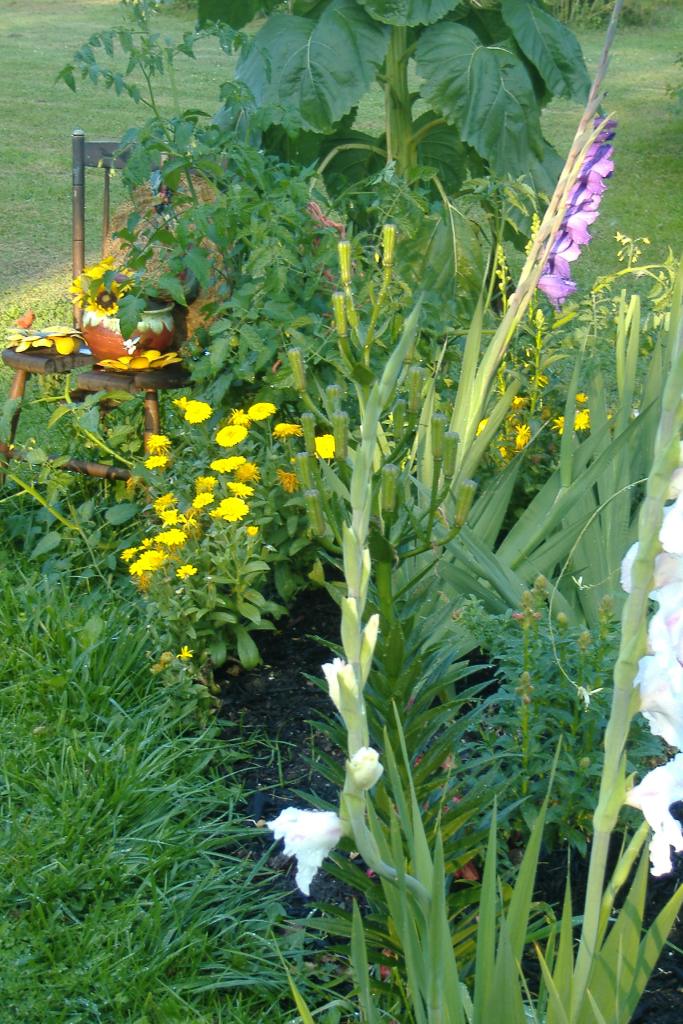
Evening In The Garden
I swung open the squeaky screen door and stepped into the living room. “Well,” I continued, eyeing the white carpet, “except for the cat puke.” Doone is an avid puker, usually after she overeats, so it’s not unusual to find these little gifts left for me.
When I returned to the porch, there sat the cat. Preening her fabulously-perfect coat and looking for affection.
“Well, Doone,” I postulated, “they didn’t write about it in their book, but if Eden was such a great place I’ll bet Adam and Eve had a cat.”
“Meow.” she replied.
Again I am at a loss when it comes to describing the beautiful sunset lawn that was my view. The long dancing shadows of trees waving in the wind, the passing flocks of cowbirds, the peach and pink and rose and salmon clouds.
Jeff’s Rest
“Yes, Doone,” I said as my feline friend ran off to kill one of my beloved hummingbirds, “I’ll bet there was cat puke in their Eden, too.”
In our last episode, I talked about making the decision to retire from the working world. After Family Leave for my wife’s terminal illness in 2020, I returned to work on a semi-retired schedule of 3 days per week. I retired officially on April 15th this year.
It’s a big step and and something of a drastic change in one’s life, and I am keenly aware that the subconscious brain is not particularly fond of change. Perhaps that’s unfair. Closer to the truth to say brain goes into a certain “scramble-the-jets” mode when substantial changes occur. It’s doing its important job of keeping us healthy and safe from our environments. It’s looking for the landmarks that remain, and sorting through every bit of new data that is sent its way.
So I decided I better go on vacation before I tell my brain that I have retired. Vacation is mostly a good thing, and brain is accustomed to the concept. I say “mostly a good thing” because I have planned and taken more than one vacation dedicated to wallpapering a kitchen or building a porch or changing the engine in a Subaru, so they aren’t always relaxing and reinvigorating, let’s say.
The plan ensued to slowly get brain comfortable with throwing away the alarm clock and not caring if there is a clean shirt for tomorrow. This could pass for vacay, easy. I figure this will be good for about two weeks or so, then brain will start getting antsy about not being awakened from a perfectly-sound (and needed) sleep, or getting that after-work rush of running around to feed the dog and the cat and serve dinner and change clothes and maybe mow a little or clean the pellet stove.
My new plan is to suggest that when I return from vacation from my semi-retirement after leave, I will go on sabbatical. Sabbatical is all about rest and recharging the spirit, and usually lasts up to a year and specifically excludes paint and wallpaper. Hopefully, subconscious brain will start to take a fancy to all this nothing-doing-ness and perhaps think about going on retreat for a while before returning to the world. Rest is good for the brain, too, y’know. It’s not just for muscles and spirits.
“Vacation” is going well, pretty much. I’m real glad about a lot of things like having time to paint (landscapes on canvas, not clapboard on houses), and have been able to mow the lawn at my leisure, enjoying it from the morning window in the kitchen. Writing seems to elude me, but I guess one needs to vacation from many aspects of daily routine on sabbatical. I get an urge to write and subconscious brain is so slick it’s right there behind me with a suspicious sneer, “I thought we were on vacation?!” And I’m so afraid of letting the cat out of the bag and throwing a wrench in the works and upsetting the apple cart that I zip my lip and hold my tongue and don’t let on and close the journal on that, so-to-speak.
I have been writing a lot of poetry. That’s an acceptable vacation thing, I guess. Just one page at a time typically, and you don’t even need to fill a page or have a topic or anything. Almost like doodling. Or writing your name in the sand with a stick. You can write poetry from a hammock or an Adirondack chair. Heck, you could stay in bed and write poetry all morning, Way late. Like 8 o’clock. Yeah, that’s vacation alright.
On sabbatical, I think it would be alright to keep a journal, don’t you? Not like just a diary like “I got new roller skates today” but more like a place to make note of all you appreciate in that now or the wonders on which you ponder in a spiritual battery recharging. Those sound like nice things for a subconscious brain to go along with for a while, wouldn’t you agree? I sure would. Sabbaticals can have more than just poetry.
‘Cause y’know I really like to write, and it’s really a part of me and has been for a long time before I got to retir this year’s vacation and subsequent sabbatical. Retire This year’s schedule has allowed me to relax to degrees I have not been able to experience for decades. It was fruitless trying to recall what it felt like when last I was a bachelor. Technically, a widower, but I am a man who is responsible only for himself now, one who answers to no one and can grant any preference. It’s simply normal life for so many, but it is new-ish to me. Sure, I lived as a bachelor before I married and had children and grew from apartment to home and from job to career.
Writing was one of the things that has always connected to the real root of me. In many ways it joins other artistic pursuits as an indelible, inalienable core. Perhaps an alter ego. A face beneath the many hats of son and father, husband and citizen, supporter and leader, guest and friend, mentor and grandfather. For all of those strong spokes of my life’s wheel are directed outward and connected inward. They return joy and glory and pride and love and feelings of accomplishment, drive, duty and productiveness to the eyes on the face beneath the hat. And aren’t “the eyes the windows to the soul?”.
Yes, I agree with you. Thanks for seconding the notion that journaling is good for the soul. That’s a solid statement subconscious brain can sink its metaphoric teeth into and symbolically chew on for a while as our virtual vacation nears its imaginary end.
A little distraction as we speed-bump over a small change and move on from vacation.
On sabbatical, we’ll have time to consider going on hiatus for a while.
Take care and keep in touch. (You may experience some delay if my mail is held while away)
(I realize it’s not exactly summer anywhere on the globe right now, but I submit this slightly yellowed composition for your consideration nonetheless.- Paz)
“Water in the well.” is my response to any talk of rain, particularly if the conversation drifts toward the forbidden: complaints about it. Every drop of water is sacred in my book, even when it overwhelms the flat roof of The Ark and drips into the kitchen where the old part of the house meets the new.
I threw the extension ladder up, and stood on the second-story roof, re-examining, for the thirty-sixth year, the joint and flashing in question. Last year’s spray-on rubber sealer was no match for the century-old Goliath settling on the crumbling hand-laid stone foundation. And so my labors of love continue this year, and I’ll be up there with a bucket of roof tar and a trowel. What might seem like a maintenance nightmare to some is to me one of the surest continuities in my life. This year, these continuities hug me with a certain knowing.
I’m on the way back to life now, from the dark and lengthy hiatus to the Island of Grief after my wife’s death. I’m readying to write again, blog entries that don’t feel as though they require continual reference to that event. Regular readers are well aware of this, and it didn’t seem appropriate to simply begin writing posts without addressing the subject.
I began to think of the summer’s storms, like the threatening black thunderheads I am watching now from the porch. There is a metaphor in there somewhere for this time in my life. We never complain about the rain, but it can bring with it burdens, and damage, too. Too much water is defined as a flood, and I have been brought to tears bearing witness to that kind of devastation firsthand.
If there is one certainty, it is that the storm will pass. Sometimes we’ll need to pick up a few branches torn from my precious cottonwoods, or climb the ladder to unclog the roof drain, but these things are done at a most welcome time. It is not part of the storm, but the storm itself is essential, entwined, and intrinsically a part of that time: when the storms have passed.
The air is left fresh and cool, even after an oppressively humid and hot July day. Roads and driveways and sidewalks are cleaner, the grime of the grind of the everyday washed down storm drains and drainage ditches. Trees, flowers and grasses sparkle when the clouds move away, and if you put the sun at your back and look to the opposite horizon, you may be greeted with a rainbow.
That’s where I am now. Like the aftermath of the storm, I’ve had to pick up limbs, unclog drains, and mop up the leak in the kitchen of my heart and soul. It’s not quite as simple as everything going “back to normal”, as there is now a new normal. The limbs torn from the tree will never regrow, but the tree is still alive and well, and will continue its own life as a beautiful tree, minus a few branches.
Back to the Ark. Reality raises its head as I return from my altered state. A number of projects have been let to slide, and some of them significant. I was to make more concerted effort this year at jacking and leveling the sagging floors, as the 115-year-old locust trunks that support them begin to decay and compress. These are normal things for a house of this vintage, but if neglected can become bigger problems. Just the other day I looked up from the front porch and saw daylight through the roof. Another roof with a drain issue that’s needed attention for some time, and whose demise has been hastened by industrious nesting birds.
She is always a few steps ahead of me, this old Ark, as we age together. The ambitious twenty-six-year-old that was catching her up (even getting ahead in a few places), is now a tiring sixty-two-year-old widower. The ambitions remain, but the flesh is beginning to flag. Throwing the extension ladder is not as easy as in the days when I was a cable TV technician and threw it a dozen times a day. The wood pellets seem heavier than when I installed the stove a decade ago. And I have newfound respect and admiration for several homemakers that worked full time and took care of a house and family and made it look easy. I have only myself and the dog and cat and I’m still up ’til 10 o’clock sometimes doing chores.
Still, daily I give thanks for this life, The Ark included, and its leaks and the ladder and the dog and cat. I make these observations not by way of complaint, but simply to note them. I love the old Ark and everything that goes with it. It is my rock, and that of my children and grandchildren. It is our Tara, even if some days she looks a bit post-Sherman’s March.
The front porch
When I sit on this porch and look out upon the green field and wind-swayed maples, hear Bob’s grandkids squealing down at the farm or wave to Tom as he drives to Mike’s on his four-wheeler, I am immensely grateful for this little glen, and this little life I’ve built in it. And the summer storms, and the times after. Indeed, the thousand seasons of my Earthbound days.
And these continuities that will ebb and flow, and settle like a century-old Ark.
“I don’t know who designed that complex, but if I ever meet the guy I want to ask him why he’d put that hospital wing parallel with the airstrip. You know, it’s one thing to be grounded, but to lay there day after day and watch those guys climb into the burning blue, not knowing if they’ll come back…not being able to go with them…” Bob stopped abruptly, mid-sentence, and sort of gritted his teeth a little and he held his breath in and his face began to flush. He picked up a teaspoon and banged it around the inside of his mug even though he drank his coffee black. He cleared his throat several times, then quietly growled, “In fact, if I ever meet that [expletive deleted] I’m not gonna ask him anything…not gonna say a word. I’m just gonna punch him once, square on the nose, and not feel bad about it.”
– Captain “Hopping Bob” Shannon (excerpted from“Hopping Bob: memoirs of an unlikely, unwilling and unstoppable hero”)
To be grounded can mean many different things. Some good, some bad. As kids, being grounded was like going to jail. Same is true for a pilot. If you’re in a boat, being grounded is considered an emergency. If you are an electrician, not being grounded is an emergency.
As I fumble my way forward in my new life as a widower, I realize the great extent to which my philosophies and life view are grounded in reality. They are built on timeless foundations. The Moon and stars, Mother Earth. Clouds and birds, sun and rain. I have likened myself to a chip off a grain of sand in an unimaginably immeasurable cosmos.
Evening Flight
Change can be difficult. It is by definition unsettling. Even when we encounter change that was not entirely unexpected, we seek out and cleave to those things that are not changing. As I have navigated the changes of this year, I am deeply grateful that my spirit is built on things that remain constant, and things that persevere beyond the grave.
Sunrises and sunsets. Clouds that dance across the sky. The whistle of wingtips as birds course over me. The smell of rain and taste of the wind. Sun on my skin, the buzz of the hummingbird. The rumble of thunder as a summer storm reminds me how small I am, and how large the world. The white butterfly, wandering gleefully along a meandering course, reminding me how large I am in the scheme of tiny things. Reminding me how delicate is the balance in a world that has bone-jarring thunder and gentle butterflies at the same time.
Change always sounds scary. Like everything we know is ending, and we shall be adrift in the great sea of this world. Sometimes the changes are big from one perspective. Sometimes, if we can zoom out, see our lives and worlds in their entirety, we see that change is simply a part of it. Like shifting sandbars, the ebb and flow of the tides, the passing seasons, the phases of the moon. Changes come when their time comes.
Sometimes we find these are times that help to forge us. To be put to tests, to weather storms. To find strengths we were hitherto unaware of. Truths we have been blind to, sometimes all of our lives. The real and lasting value of that which we hold and have held, the joys of recollections, the sweet sting of awakening’s tears.
And if we’re lucky, we find our second winds, our inner lights, our driving cores, and charge through the change, holding to the ever-present, the long-standing and the firmly-rooted. Holding tightly on to one another. Securely grounded in those things that will carry us through to the very end.
I woke in May, From a dream-like state and winter grey. Took down crepes and buntings black To pack them carefully away. No doubt they’ll hang for me one day.
And here is May, To usher this vague time along. Sunshine knocks at windowpanes And newborn flowers line the lanes. Birds call out life’s sweet song.
I have known many Mays Though dates and years slip my mind, I recall one of every kind; A newborn baby at half a year, The first spring we were living here.
Mary’s birthday was in May. Now no other claims that month That I know of, anyway. Too many to remember, and scattered, in the clan. Too many for one old and scattered man.
I’m not sure how I got to May This year, I must say. January is a blur. I’m certain February occurred. Of March and April, I can’t speak a word.
The ticking clock I once vowed to destroy Is now the tool at my employ. For all the modern medical arts, Drugs and x-rays, treatments and charts, None claim the power to heal broken hearts.
Life imposes tariffs on the soul and on the mind, When least expected or ready yet, With no regard for season, rhyme or reason. Each year the tax rate rises As my age does, I regret.
But May! O! May! What new blooms have you today? Taxes paid and winter past, Lilac perfumes fill the heart, To life, again, the pendulum swings, As the greening cottonwoods sway.
Mid-November brings a unique season-within-a-season here in the northeastern United States. My wife says it is her favorite part of the year.
It arrives long after summer, and summer’s cascading roll into autumn. It’s after the harvest and the fall foliage spectacular, after the hubbub of Halloween.
The trees have thrown down their leaves, (except the oaks) and an almost ghostly grey army now stands silently all around. Even the ever-present evergreens seem more sparse, just a garnish on a washed-out, neutral-colored landscape. And there are glorious, quiet sunsets.
The wind takes a new voice now. No longer playing the millions of green leaves against one another in a chorus of whispers that rise and swell, ebb and wane. Now she whistles through the naked branches, and makes a singular sound striking the pines. A gentler sound. A hushing.
This is a time for rest.
All the hustle and bustle which started last spring (or earlier, browsing seed catalogs) winds down as the first frosts and first freezes blow the final whistle for flower gardens, vegetable gardens, kiddie pools and window screens.
We’ve decorated and raked our way through October, and gathered up the colorful gourds as they begin to go soft. We’ve put the plow on The Black Pearl and folded up the plastic chairs. They bid adieu to the side porch, like migratory birds, to return when the snow melts and these geese above fly in the opposite direction.
Windows are closed, except for the taking advantage of those few surprise days when temperatures rise to the sixties. The house becomes more quiet with portals sealed. The tractors on the road and cars driving down from the pond are more a backdrop than sound effects. Mowers, few but not unheard of in November, are muted.
The summer sounds of passing breezes and barking dogs and children on school vacation are subordinated to the television and the clothes dryer and the blower of the heater fan.
The days rapidly grow shorter, as if the Cosmos itself suggests enough work has been done, that more sleeping may be in order.
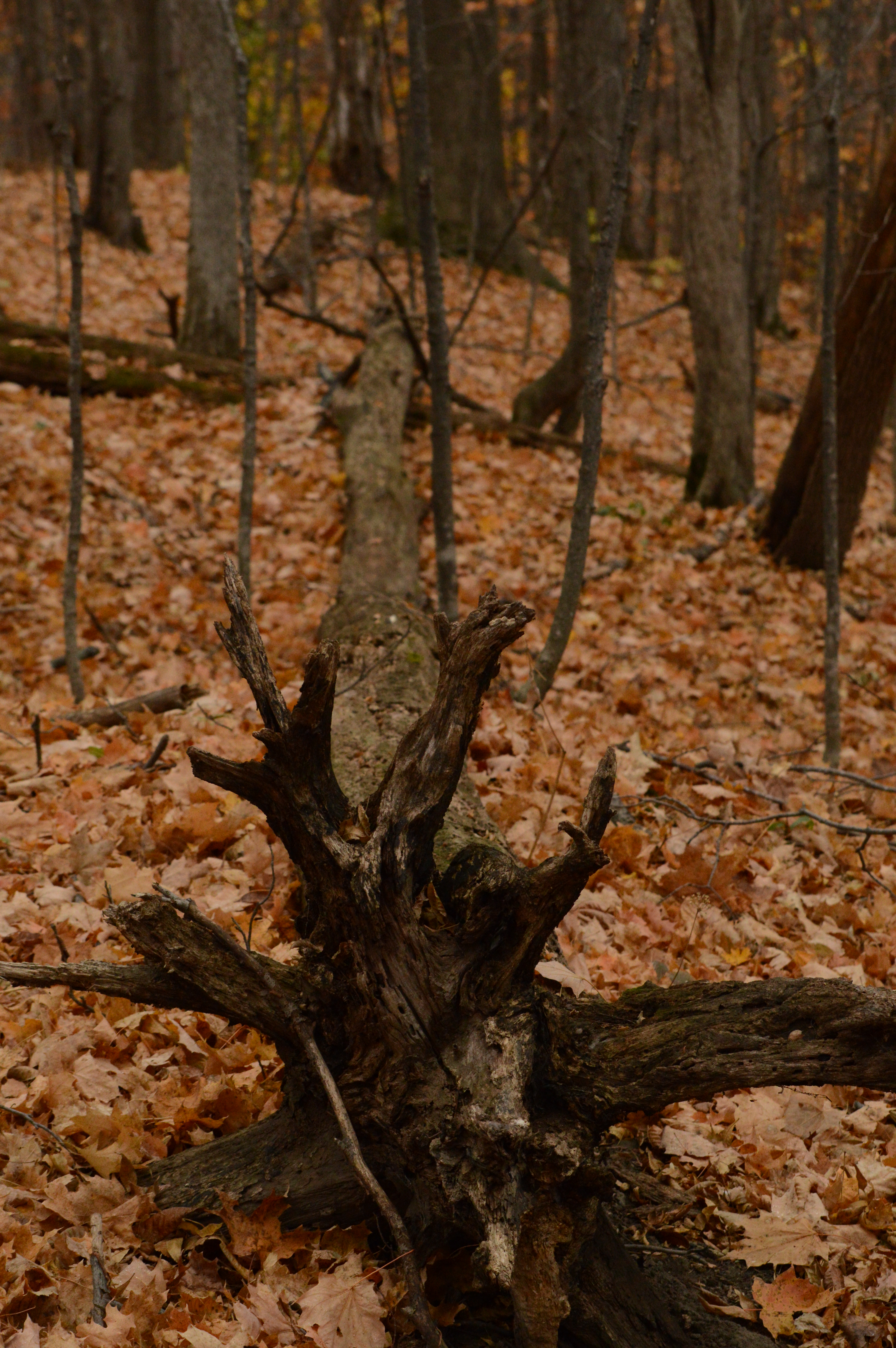
In the Wonder Woods, most things are settling in for the winter. Well, except for squirrels. The great shade canopy that cooled us in the Pinnacle Days of summer has been removed. A few slender sticks draw the eye upwards, out of the woods, to the wide open grey November sky. Crunching through leaves sometimes feels noisily intrusive, foreign to the quiet wood. Just a little rustle is okay. Say about the size of three hasty and ambitious squirrels.
Grasses and weeds still stand straight and tall, but all are dried and tan, looking more like stage dressing than formerly-living things. This is their time to rest, too, now. Done with growing and blooming and seeding, now a brief pause to take one last look before snows lay them down and pack them flat.
Between the clamoring flocks of geese, the birds of the season are a bit quieter as well. Less with the “bo-gar-DEE!” of the redwinged blackbird, the raucous cackling of crows. Now Juncos dart about with barely a peep, flocks of cowbirds transit the glens of Engleville with no more sound than the whisper of their wings. The Barred Owl glides silently. (Okay, so we all still stand at attention when the chickadee shouts out his call, but he is the exception.)
There is this brief window now, after the fall and before the holidays begin in just a few weeks. When the world is putting the northern hemisphere down for a long winter’s nap. We’re given a breather now. A chance to relax and enjoy all that we’ve worked for during this circle around the sun that brought us back to this place again. A break in the rolling year to clear our minds, to reflect, to dream of futures. A good time to take stock of all the good in our lives. A perfect prelude to Thanksgiving.
Before all that gets started up, before we hop onto the ride for another circuit around the sun, we have this calm, peaceful, mid-November.
Me and Life, we have this game we play. Timing and seasons are incorporated, but it’s not a race. There are no rules at all, really. It has goals, but no specific scores. Curiously, it is not considered a contest, and the winner enjoys winning throughout. I am the winner.
The game play takes place on a huge field. (Several fields, actually, as well as some trails and woods, a lake and a couple of ponds. And a swamp). There are few boundary markers. Mind you, the boundaries are there, and life will let you know if you cross them.
Misty Morning Walk
Ryan’s Hill
Avenue Of The Pines
Starling Sunset
Sledding Thursday Trail
Ice Off On West Creek
Doe and Fawn in the Glen
Beneath The Pines
Widowmaker Snow Devils
The Pine Stands
We have been at this a long time, so it’s impossible to describe how the game starts. No doubt it just seemed like life to me as a child and stupid young adult. In a way it’s a bit like chess, in that we each can have several campaigns unfolding simultaneously.
Some of my campaigns have been underway for a great deal of time. Some for years. Maybe some for decades. Something about this time of year that makes me pause ever-so-briefly to look at the tally. There is a sense of turning point in this season. A seventh inning stretch.
My plays involve my hearth and home, my beloved patch of green. Battling the sumacs. Cheering on the pollinator garden. Keeping open the trails, beating back the brush of summer. Basement windows are in frequent play, opening in the spring, closing before the pipes freeze. They are essential in my long-standing feud with the dampness in the hot and damp seasons, the drafty cold in the cold and drafty seasons.
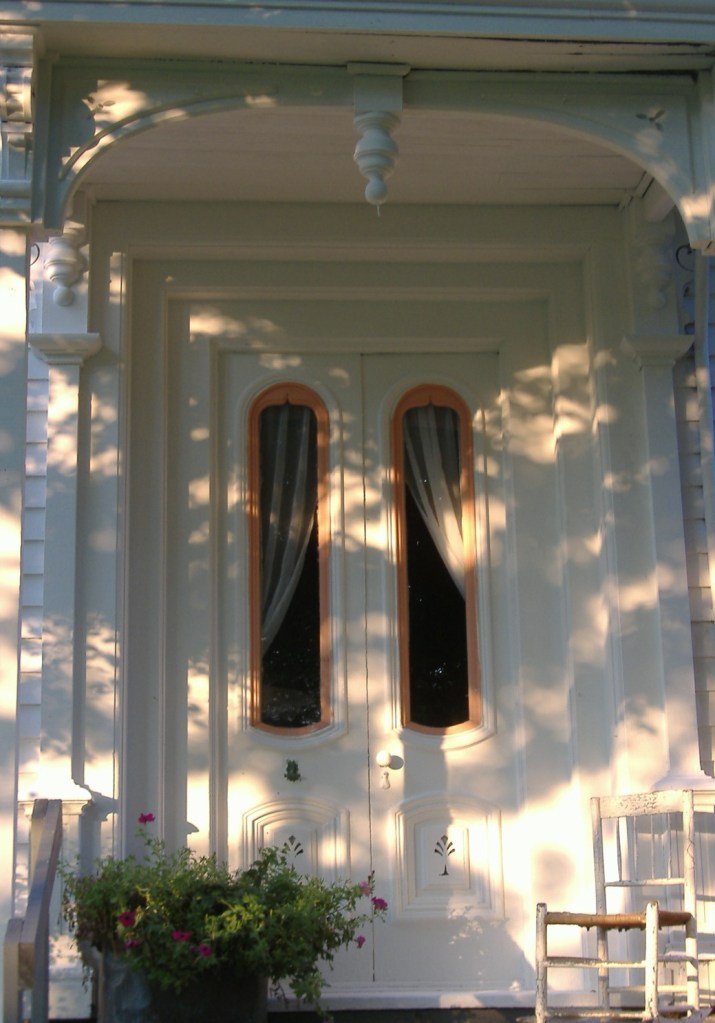
The Coffin Doors
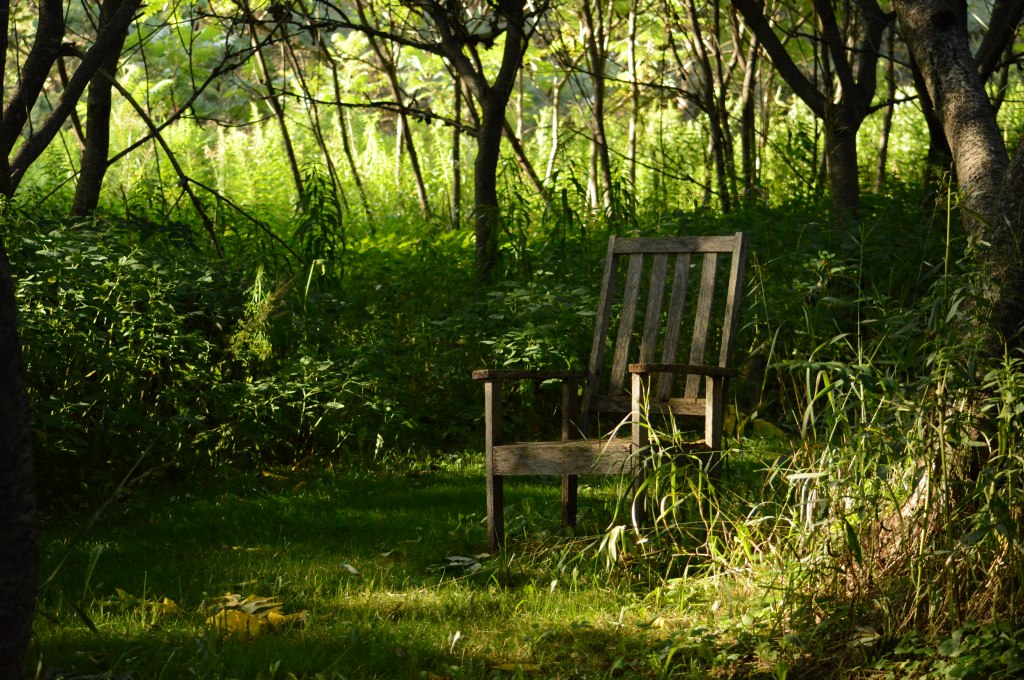
From My Window
Waiting to Walk
Off Season
It Begins
Signs Of The Season
Barn & Cottonwood At Sunrise
Kitchen Window Sunrise
To Let
I marshal a team for the season of light, rain and grass; lawn tractor, string trimmer, lopping shears and bow saw. A separate team, an offensive detail of sorts, tackles the bulkhead door, the screen door hinges, the crooked cupboard doors. The mice, the chipmunks, moles and voles that would delight in sharing our Victorian home crafted by masters. This team includes our tallest, the 28-foot ladder to reach the end zone of the roof to patch those cracks and realign the TV antenna. They fill lockers with hammers, drills, levels, screwdrivers, tin snips, glass cutters, putty knives and paint brushes, chisels and awls.
On defense, we train against the elements. Cold and snow and wind. Our captain is a four-wheel-drive plow truck, our co-captain the pellet stove. Plays include the sealing of 114-year-old windows and a foundation sill that has drifted in the five generations since those Scotsman cut and laid the toppling limestone. A squad of draftstopper chearleaders greets us at the door to the parlor, the coffin doors out front, the side door to the porch which will see the return of the bird feeders, and welcome the juncos, and say goodbye to the porch swing for a little while.
And herein lies our game. I make plans. Paint the house. Dismantle the toppled barn. Reclaim the back part of the property from the brush and weeds. On the playlist are many intentions. Replace the cracked glass in the round-top window out front. Paint the walls of the spare room. Get a load of gravel to fill and level the driveway, last treated twenty years ago. A fence to guard the corner garden, where the concrete Virgin keeps watch and welcomes visitors, to keep the dog from uprooting the hydrangeas.
In the meantime, I must keep the plates spinning on the stage as I try to dash off to these accomplishments between mowing the constantly-growing grass and feeding the dog and taking the trash and cooking on the barbecue. Somehow there is always a way to squeeze in a few days in a tent at a lake, quiet sunrises in the cabana, pulling sweet bass from the pond, hiking through the Wonder Woods with Sassy June.
Occasionally, someone will call a time out. A day spent with the boys in pursuit of white-tailed deer or turkeys. A day at daughter’s farm to help host Family Farm Day. A birthday party for dear friends. Thanksgiving and Christmas and New Year’s Eve.
Max and Kacey
Merry Christmas!
Festive Table
Farmer Girl
Rabbit Hunt
So Many smells
Festive Table
Lizzy, Maddie, Max & Chuy
Then, back to the game. What wins do I count for this season? What plays remain on the board? Where did I lose a pawn or perhaps a knight? Where have I broken the lines of my opponent?
Like fencers, we pause for a moment in September, and face one another honorably and cordially. We bow to one another.
We’re right smack dab in the middle of it now, this summer thing. Hot weather, T-shirts and shorts, long days with the sun setting at 8 o’clock. Misty, humid mornings. Hazy humid afternoons. Passing thunderstorms. Welcome trips to the lake or the ice cream stand.
Spring’s constant is change. Each day nature reveals something new. A flower, migrating birds, trees leafing in. The days grow longer and the temperatures milder. Away with coats and hats.
Then we roll into June. Busy as can be with grade ceremonies and graduations and weddings. The fields are getting greener, the pumpkin plants can be seen now, starting their march to Autumn. By the end of June, we’ve pretty much accepted summer weather as the status quo.
Too often, our senses are so calmed to summer that the slightest change will awaken them. A particularly chilly night, when we are shocked to find ourselves lighting the heater on a June morning. A hot day, which is what we would expect from summer, becomes the topic of whining conversations. “It’s oppressive today.” “It must be the humidity.” “Looks like rain all weekend.” “My air conditioner never stops.”
It takes focus to remember these are unique days. The brain purposely makes you forget February and snow and down comforters, and lulls you into thinking that life will be like this from now on. But the clock is ticking, the Earth is tilting, and these days we dreamed of in the depths of winter are numbered.
Now we arise each day and move through it without noticing the outdoors and the subtle changes in the flora and fauna. The lilies are blooming and the hummingbird regularly visits the foxglove. It’s just another summer day for us, but for the wildlife, the clock is ticking, too. Babies must be raised, taught foraging and camouflage and self-defense, and fattened up for the next set of seasons. Fledglings fledge and leave the nest, often under the watchful eyes of parents.
And so what looks like just another summer day is anything but. Thick leaves on trees hide the squirrels, thick underbrush hides the mink until she scurries across the road with lunch in her jaws. In tall grasses, Common Yellowthroats and Skippers and Crickets disappear, save the occasional glimpse of movement, the flash of a wing.
Now I am on watch each day. Every day I remind myself (and the dog, when she’s listening) that these are our pinnacle days. I must remind myself to look and to see and to treasure these moments. Lush, full trees. Red-winged Blackbirds. Summer storms. Each and every day counts, and I am bound and determined not to simply let them pass by without notice. Every evening I stand outside and marvel at the mild air, the starfield above, the calls of creatures of the night, the owl and the coyote.
When I awaken in my armchair at 1 a.m., and Juney wants to go out, I follow her. I note the position of the Big Dipper, off to her summer place, and far from her winter home. I note the morning sun rising over the Sumacs instead of the south side of the barn. On my commute she rides quartering-off to my left, a welcome relief from the dead-ahead of the equinoxes.
“Remember these lilies, These misty mornings, This thick underbrush, This Pinnacle Day.”
Ryan’s Hill
Fox Creek
Max At Bowmaker’s
Hayfield
Chuy’s Trail Morning
Picnic
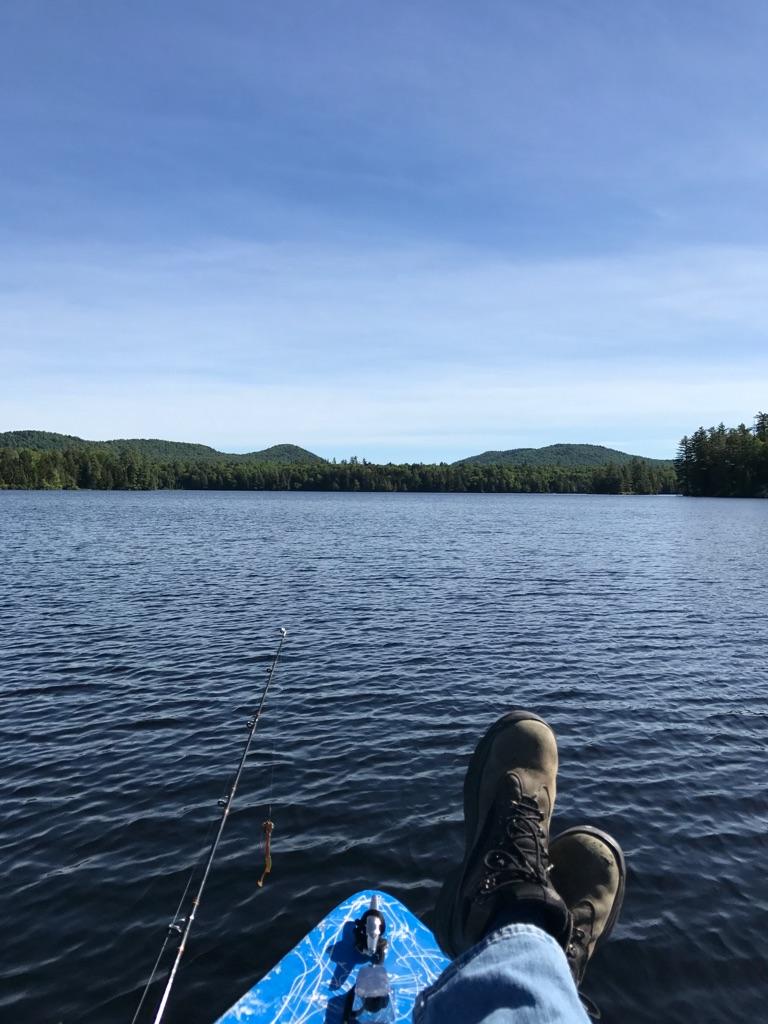
Summer Footwear
Grasshopper
Little Bit On The Cape
Evening In The Garden
Doe & Fawn
Bounty
Summer Fun
Azure
Forked Lake Sunset
Misty Morning Walk
Coby Res
Fishers
Jack
Camp Guest
Camp Dinner
Wild Lilies
And now I am off for the weekend to my favorite lake way up north in the High peaks Region of the Adirondack Mountains. Here I will commune with loons, lure some fishes. Sleep on the ground with the sounds of night things rustling beside my tent. I will rise with the sun and smell the air, scented with water and perfumes of pines. I will gaze out on the glass-smooth water under the stars. I will be in touch intimately with these Pinnacle Days, and will relish every moment before my return to civilization.
Keep watch now.
These days seem to pass so quickly, and I wouldn’t want you to miss a minute of it.
The four seasons called out on calendars are but a repository, a filing cabinet of sorts, for the thousand seasons-within-seasons that we observe during one trip around our sun. Within each quarter-year drawer are dozens of files, arranged chronologically of course. Once in a while, a file will be out of place, and some reference others. The paper calendar and the imaginary filing cabinet lend an air of order, of regimentation. If we look more closely it is sometimes more random, almost haphazard, sometimes chaos in defiance of logic. If you’ve ever had a late freeze, a simple cold snap on one solitary morning in April or May, you will understand. How this will echo and follow you daily, all the way around our planet’s course until next year.
No lilacs. Frozen apple blossoms results in a full year without apples. No little green starters in midsummer. No fruit on which to watch the blush of summer grow redder on its cheek, until it hints at the next season. No piles of apples amid the autumn leaves for deer to nosh on. No soft brown blobs left when the snow recedes, their presence welcomed by those who’ve toughed out a long, frozen winter. Of all the things a late freeze steals from me, I feel the greatest sense of longing for the apples. Fingers cramp from crossing until June.
After a long winter with rather little snow, we have now seen in this second week of April a number of flurries, even a few inches of accumulation which usually lasts only a day. We have a few tulips that have opened on the south lawn, where they bask in full sun beside the stone foundation. Tulips doused with snow somehow look entirely natural, perfectly contented. An April snow is easy to love, as one is keenly aware that it will not stay and pile up and need to be shoveled. It’s especially welcomed this year, to bring up the water table. Spring snowmelt fills our reservoirs and water towers, and starting the year in the hole brings trepidation.
April also brings a breathtaking and captivating burst of growth in nearly every tree and shrub. It is a tiny season-within-the season of spring, and if you’re not watching, you could easily miss the Budding Season among the trees. It’s easy to spot the pussy willows, their fuzzy catkins begging to be petted. So, too, the “Tulip Tree” magnolias will start to show bulges at their fingertips, gently unfolding into pink blossoms. Cherry trees catch the eye with their white flowers, and dogwood glows red in anticipation of leafing out. But if you look up, if you look into the woods, you will see giants in bloom.
Oriole In The Apple
Last Of The Snow?
Colors of Winter
In Between
Killdeer In The Grass
Pussy Willows
Pileated Woodpecker
Catkins
Turkey Cotillion
To Let
Juney In The Mud
Nesters
Yay! Grass!
Red bellied woodpecker
Spring In The Wood
Spring Foal
Frosty Morning Trail
Turkey Fledgling
Avenue Of The Pines
Sparrow with Apple Blossoms
“Redbud!” I declare when first I see them. As if it is a scientific name for this exciting taste of the day-by-day changes spring gifts to me. Red is the most popular color for the earliest leaf buds as they sprout from twigs, just babies. Not yet old enough to produce the chlorophyll that will paint them their trademark green. Some are yellowish, and some are indeed green when first they appear. Some trees will produce catkins, mossy-looking or fuzzy or string-of-pearl tendrils dangling like elegant earrings. Ready to greet the turkeys for their spring cotillion, a festive display for the dancers in the fields, the bachelors sporting their finest.
It is a feast for the eyes as well as good food for the soul. Even one who embraces winter, and feels woe at spring’s arrival, such as myself, must delight in the colorful profusion on those naked sticks one has viewed since October. Winter is quite monotone, with a few splashy highlights. It’s mostly grey bark and white snow and a trim of almost-drab evergreen, dotted with a blue jay, a red-bellied woodpecker or a northern cardinal. Now these giants are dotted with colors, pale yellow and deep burgundy, and adorned with kinetic energy. Herein is a trusted source and undeniable sign that winter is fading behind us. Not an observant groundhog or college-educated meteorologist’s best guesses, not the reading of signs and recollections of years past. Here is solid proof from the authority.
Flowers, flowers, flowers. From Mother’s Day to the mums of Thanksgiving we love flowers, flowers, flowers. But how many are waiting for that May day to relish in the beauty of blooms? How many are ordering seeds and starting morning glories on windowsills and cleaning out the greenhouse on a mild April day without looking up, looking out, and beholding the biggest display of the present season? Sure, we’ll have fields of wildflowers if you want to wait three months. Sure, we have yet to smell the lilacs and peonies, to be wowed by the locusts, and mesmerized by the honeysuckle. You’ll have all summer for that.
For Budding Season is one of those rare and brief moments in nature, when she’s on the move and swinging into action. Like the nesting birds and calving cows and lambs that dot the farmyards, it is soon to be overwhelmed by all the life and living that summer brings.
It comes along at just the time we need to be reminded that these cosmic clockworks never fail us.













 Life In Engleville